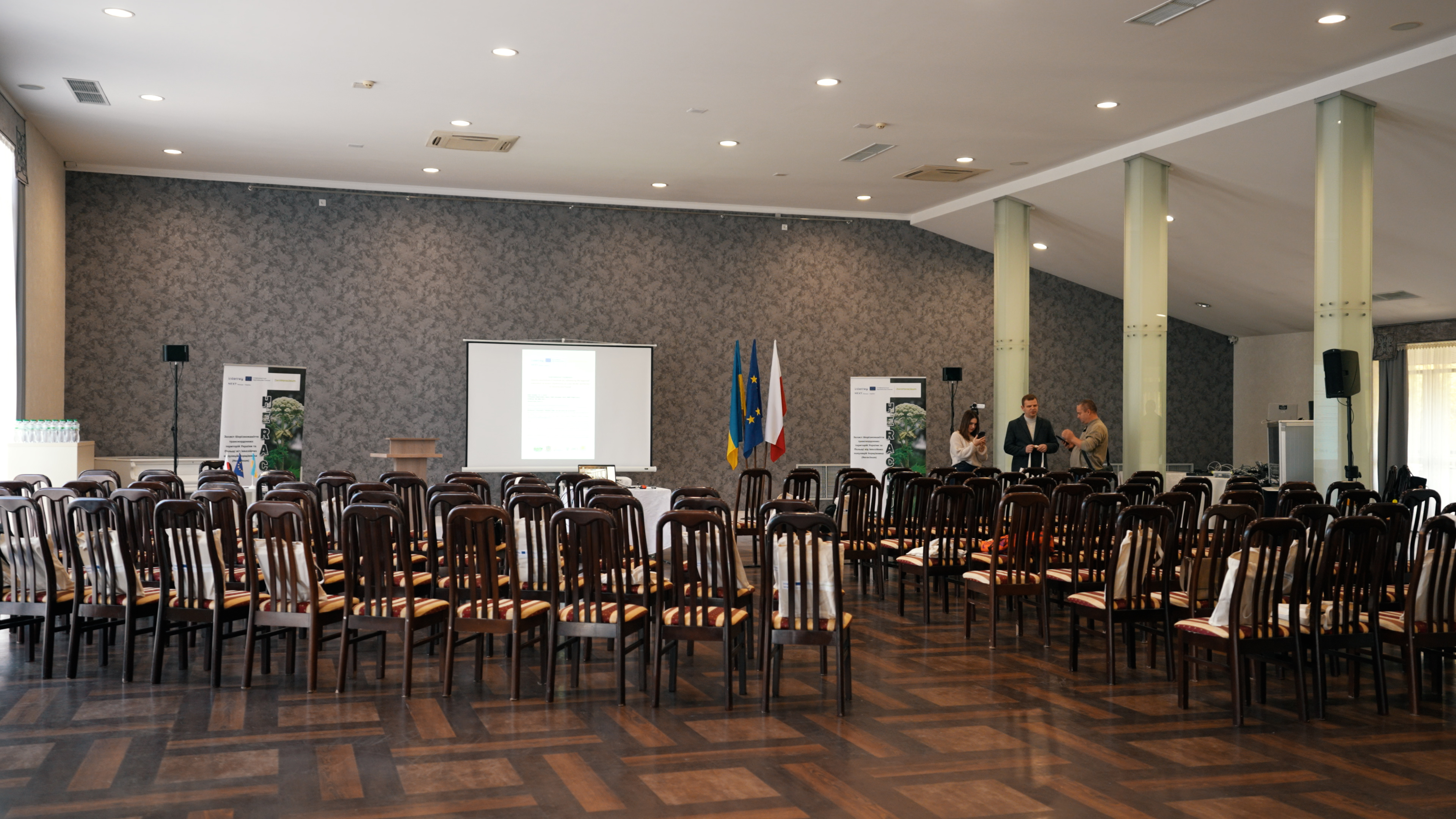
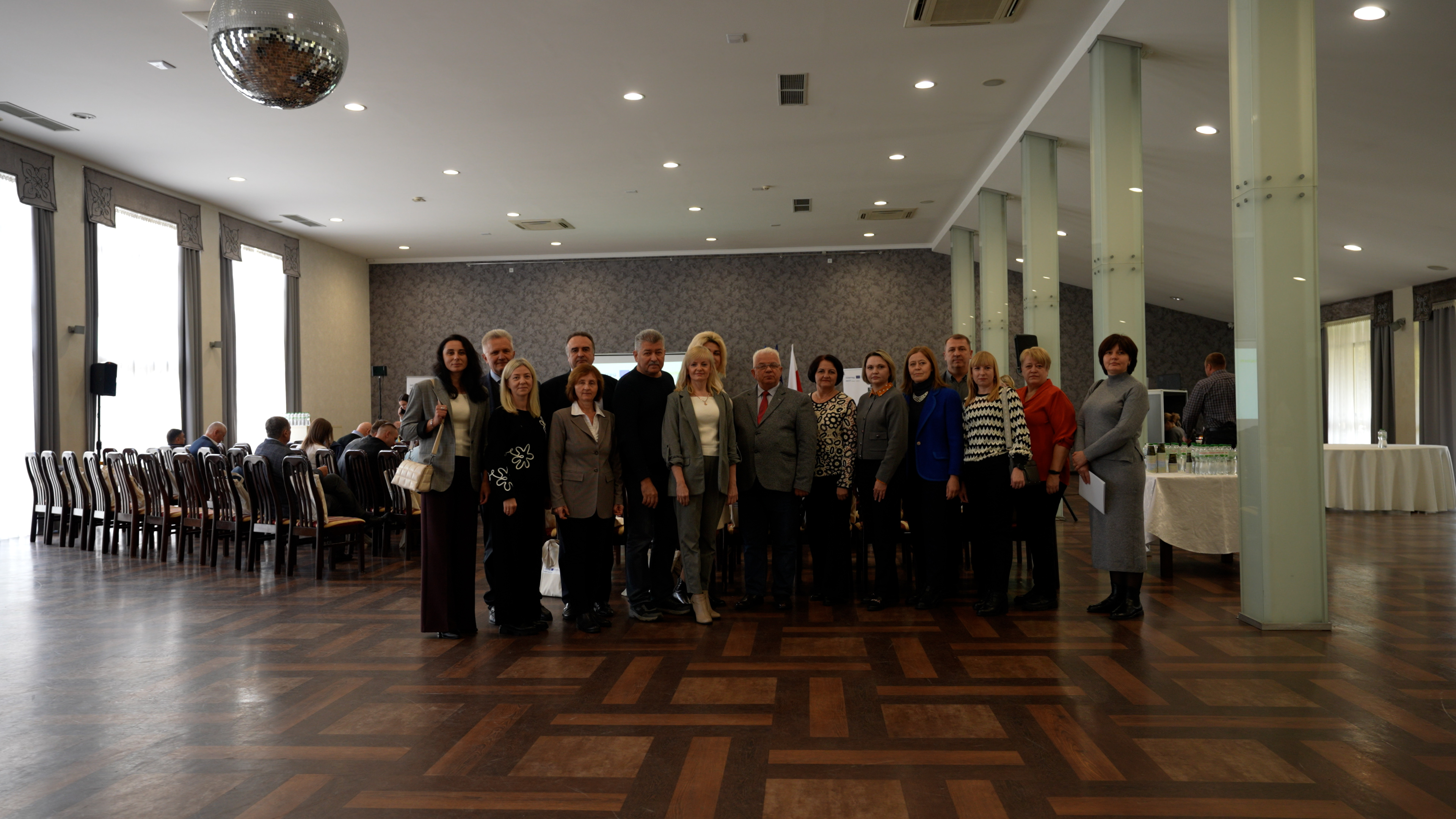
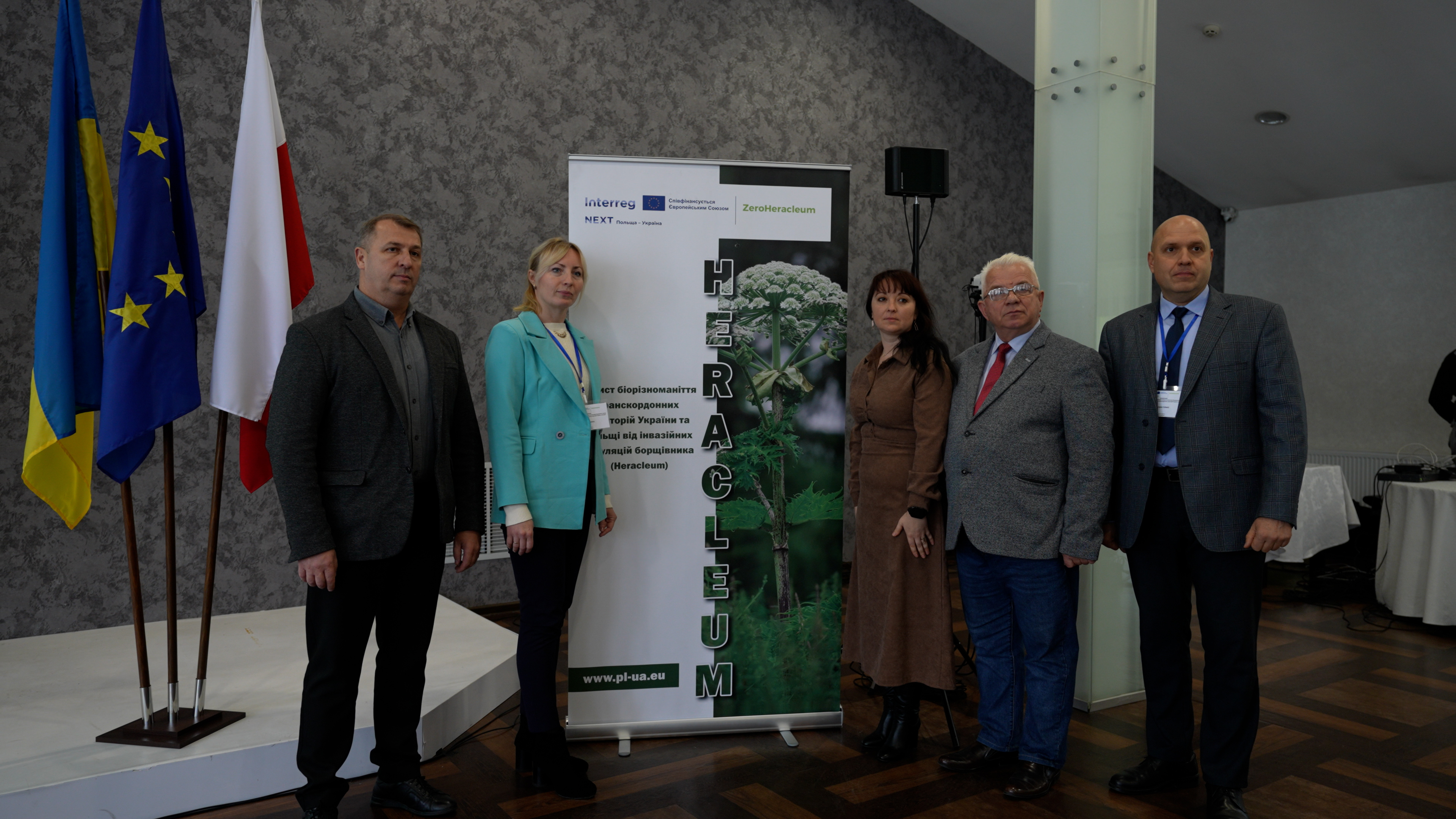
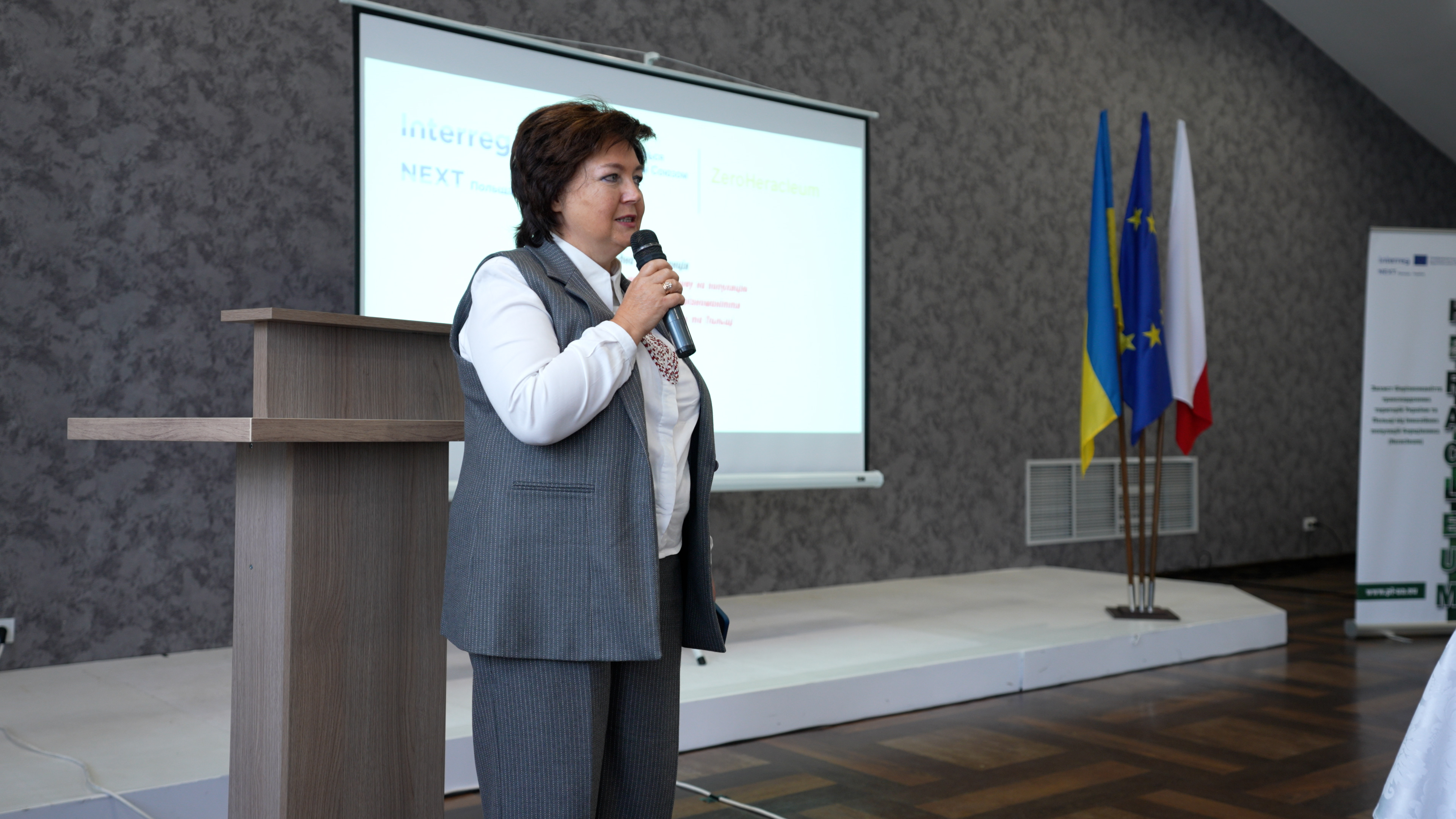
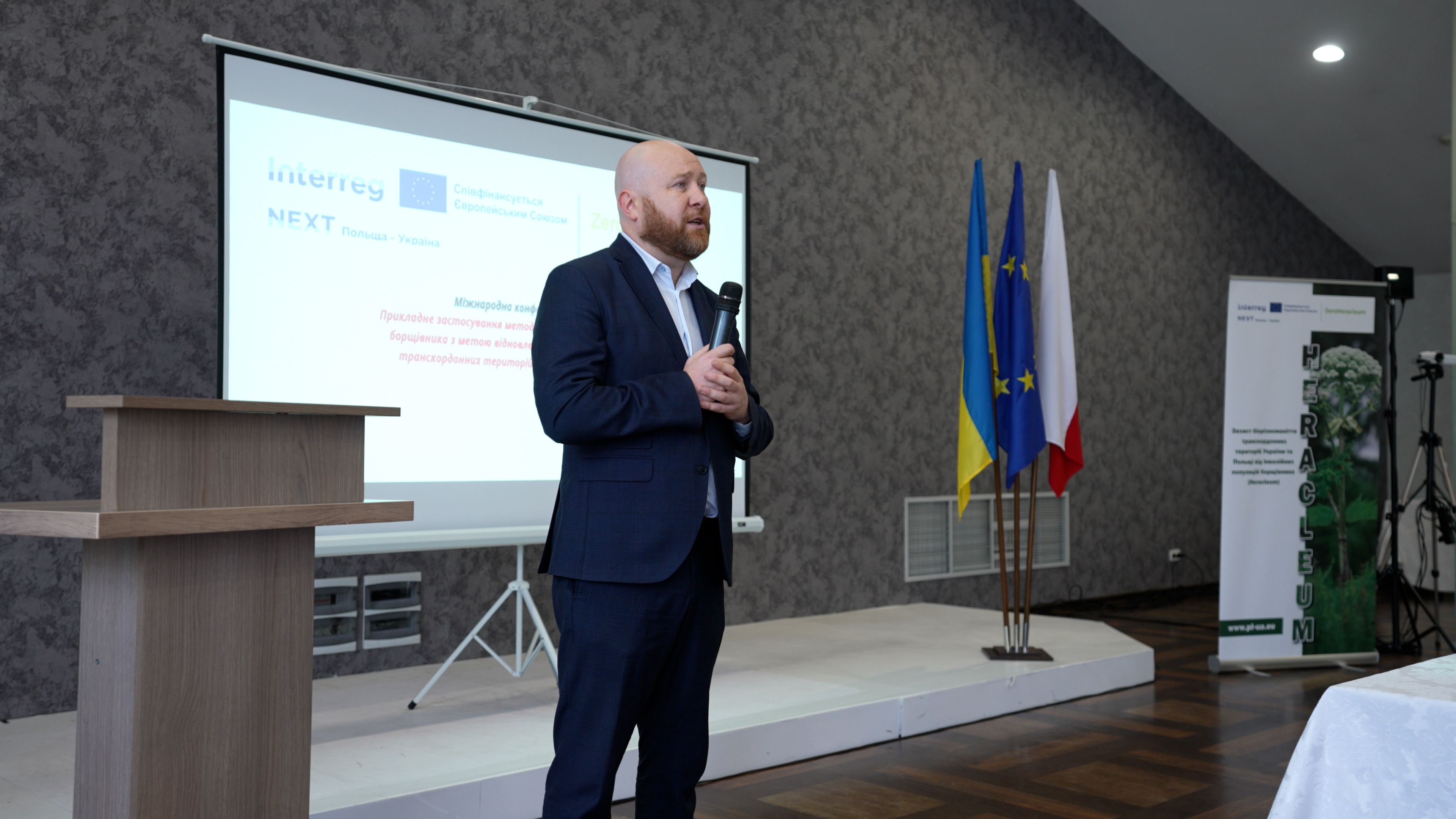
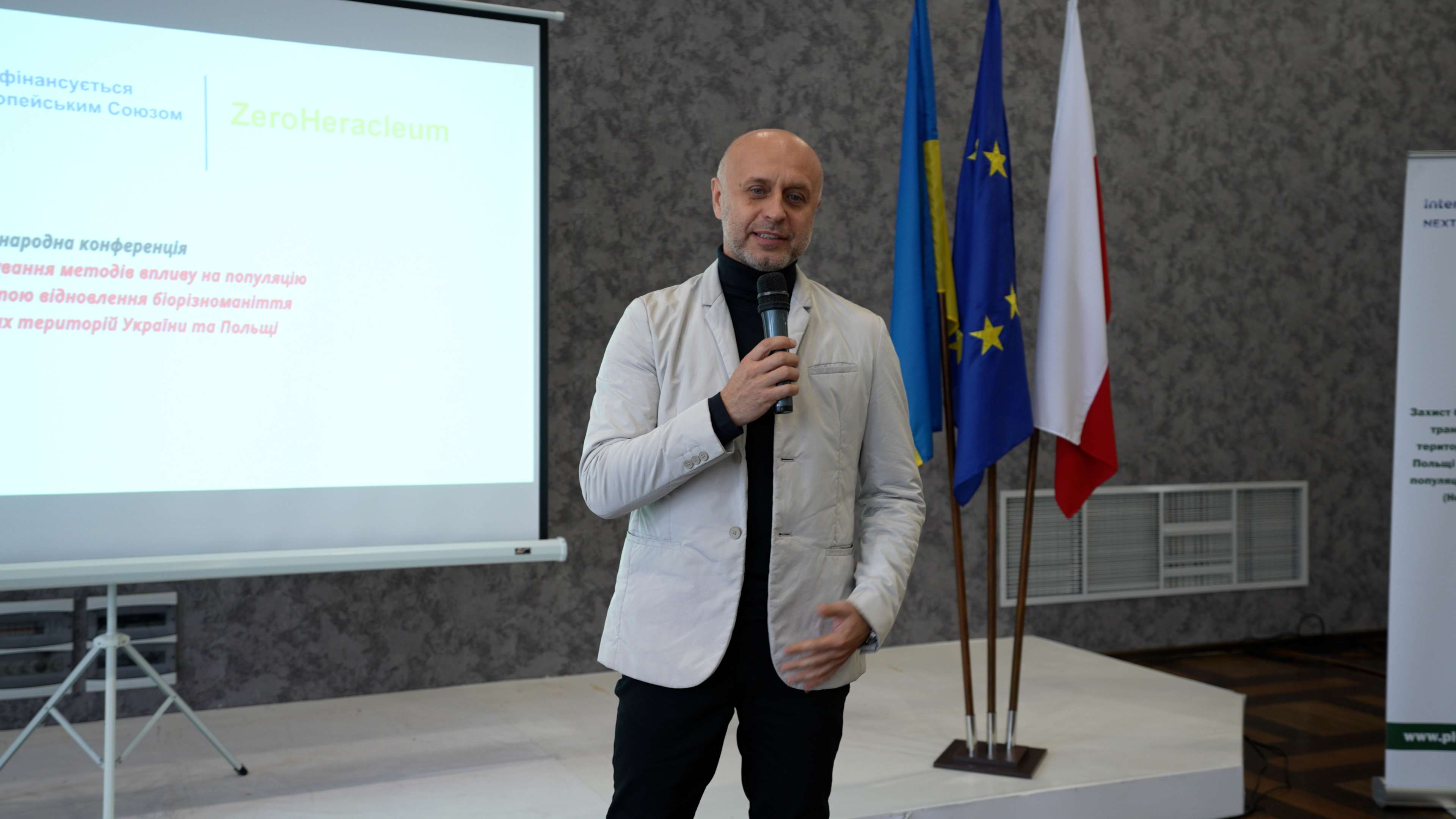
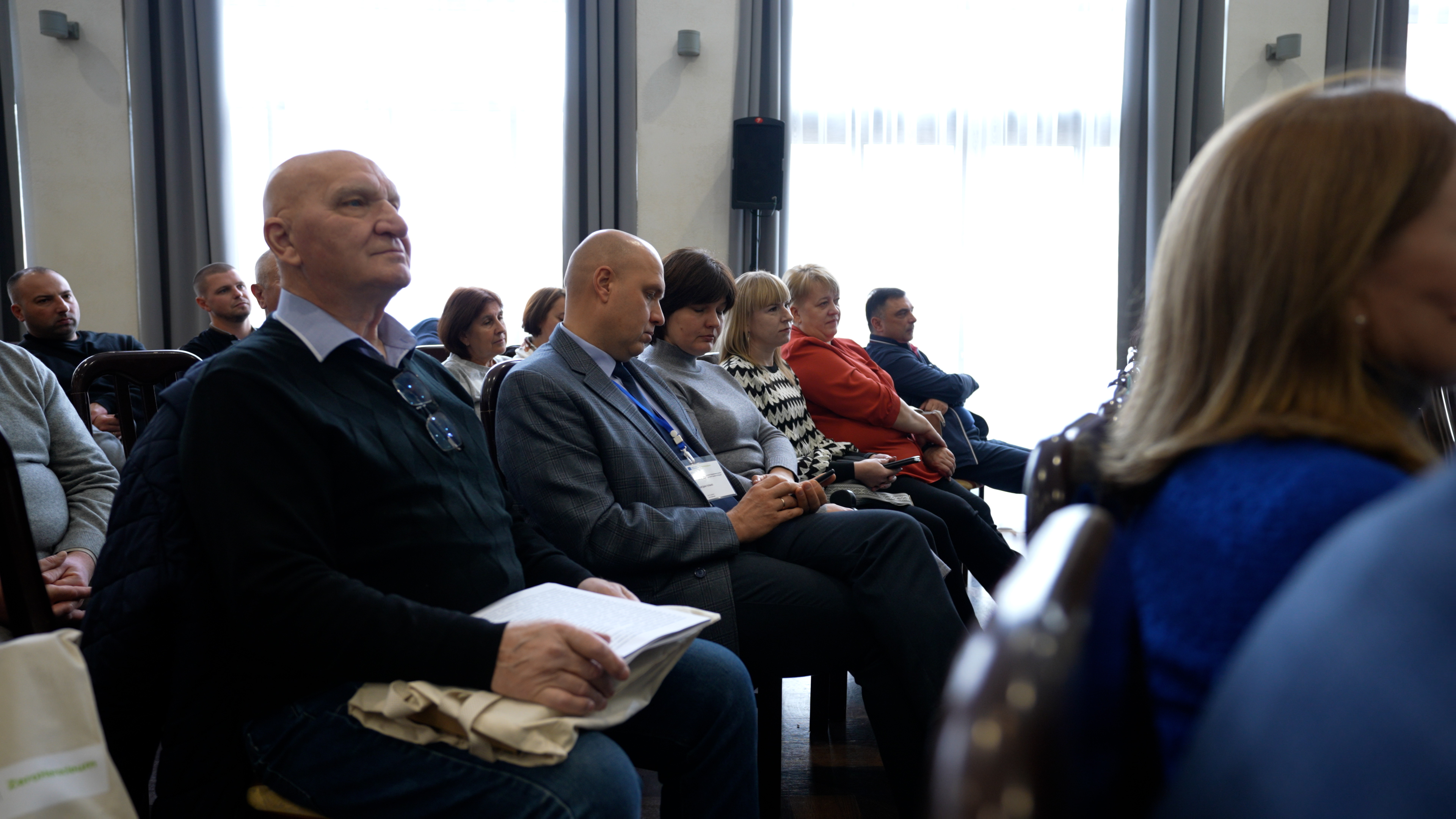
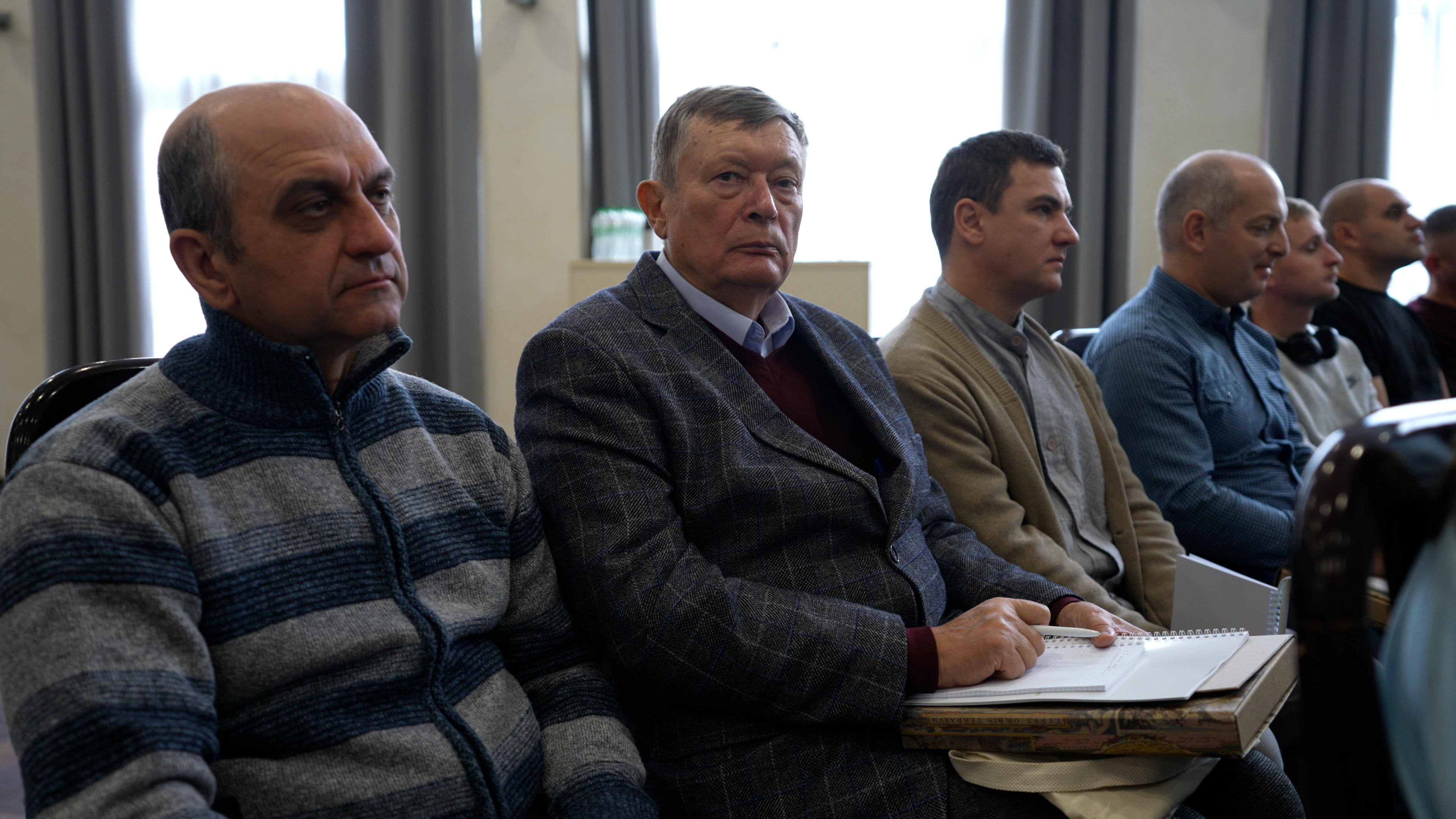
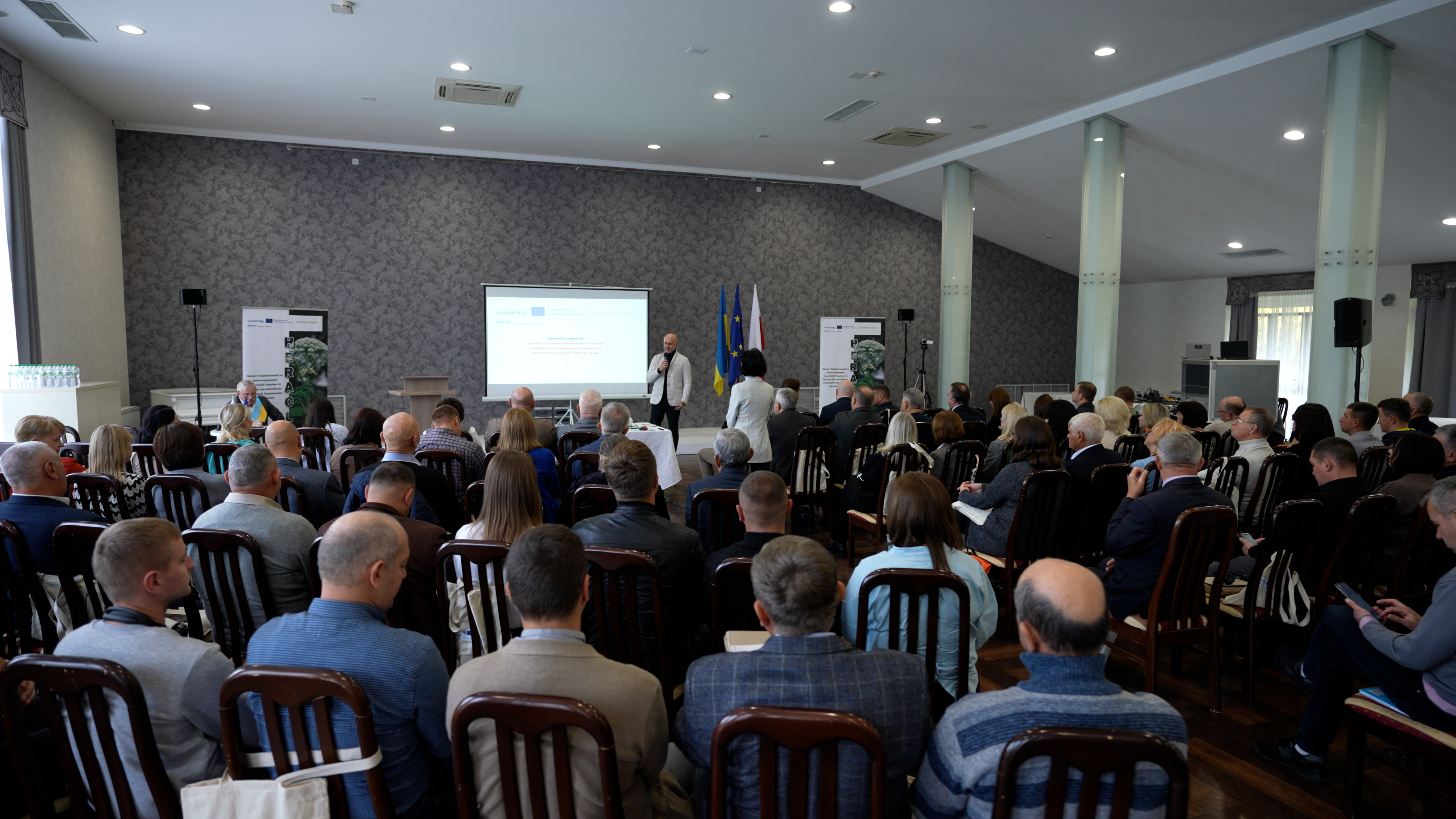
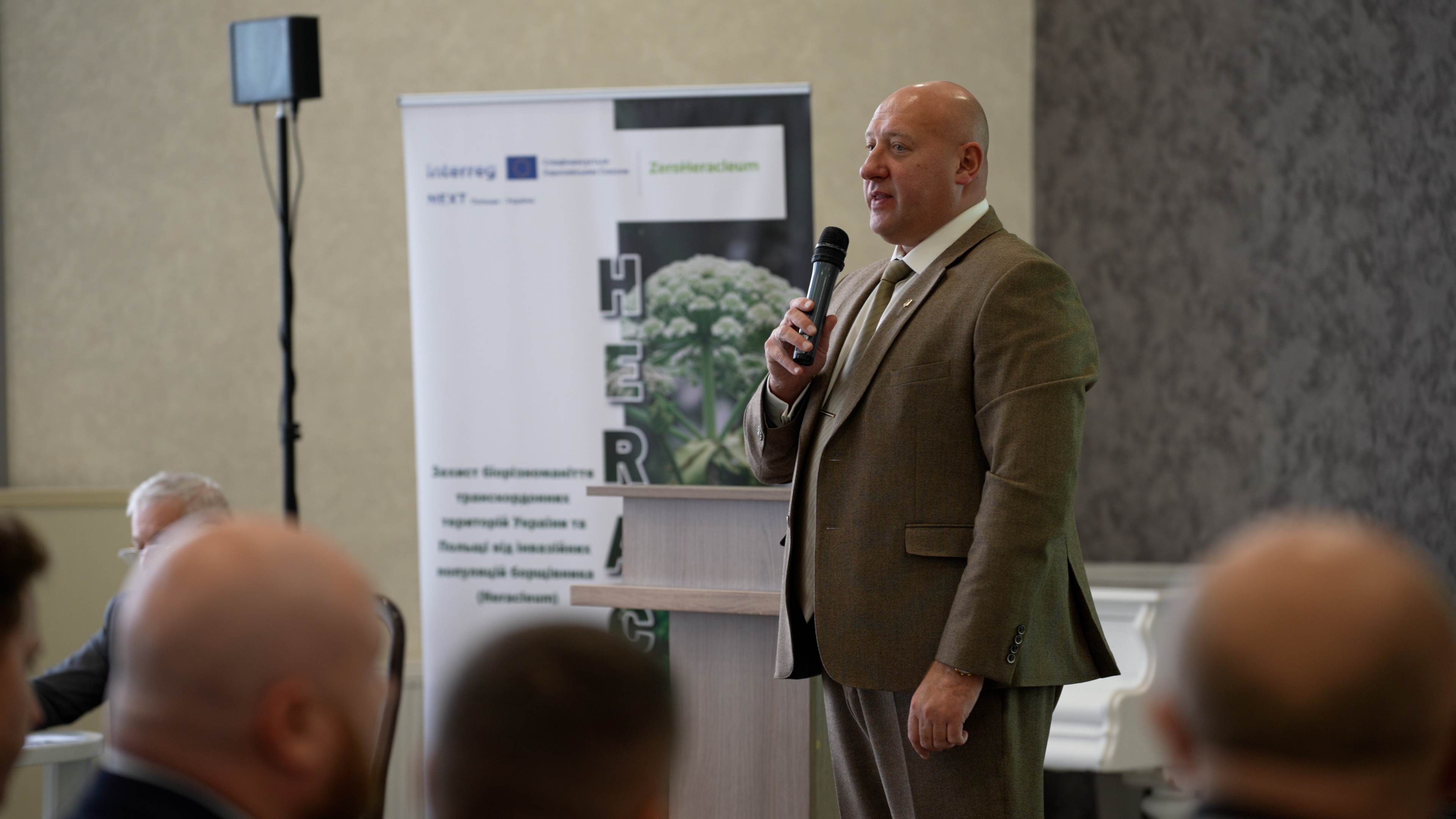
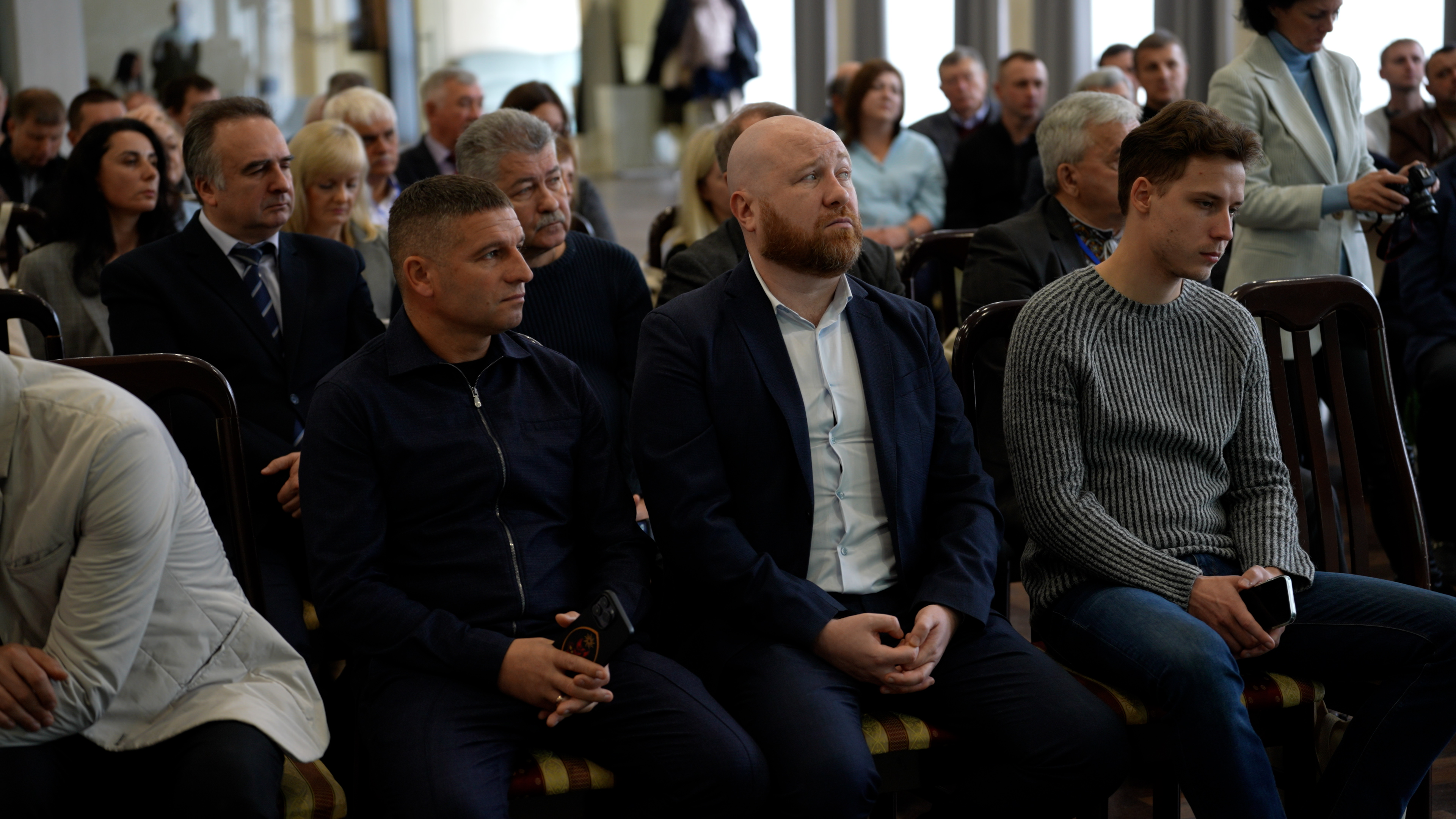
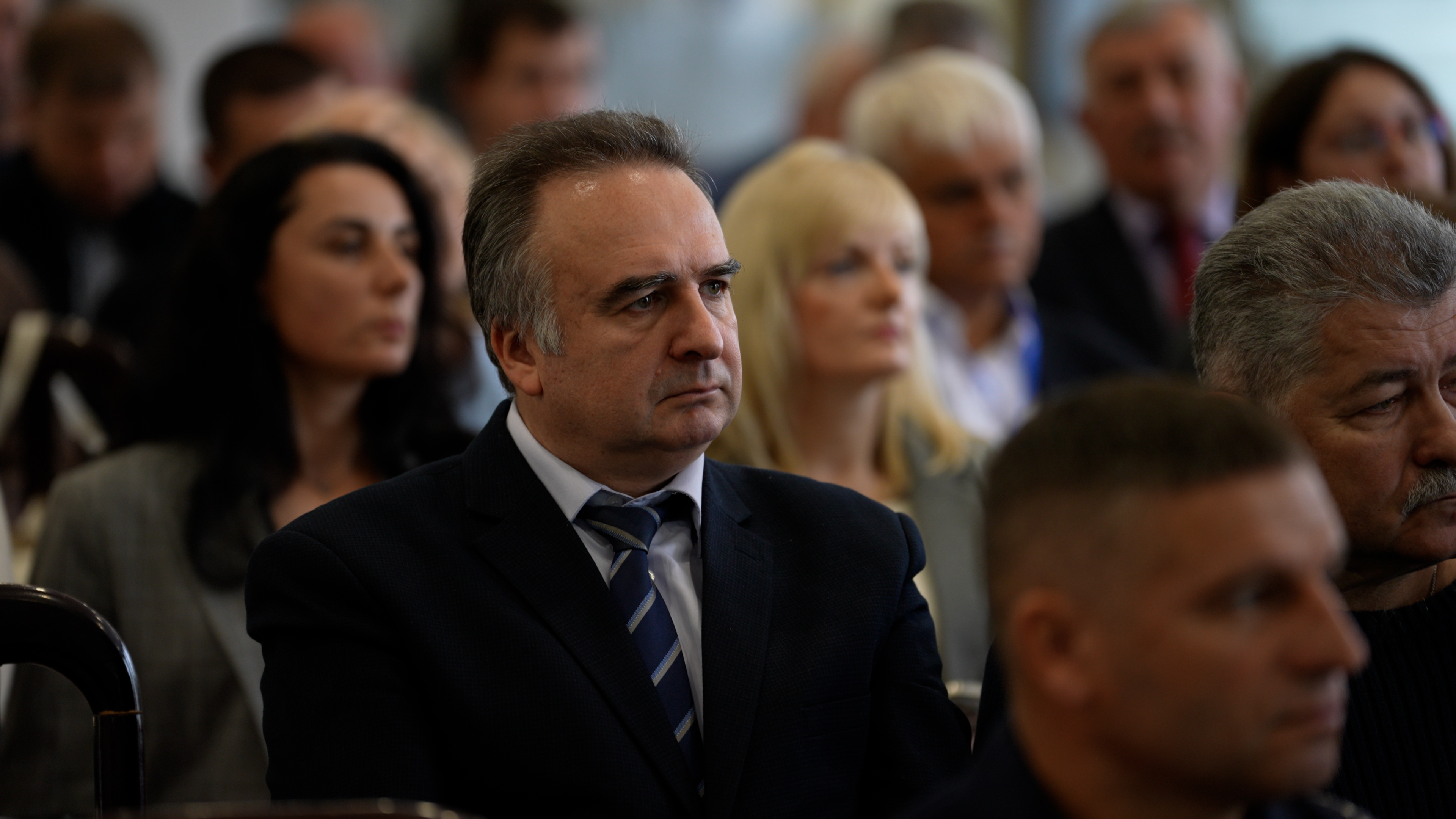
An international conference entitled ‘Applied methods for managing hogweed populations to restore biodiversity in the cross-border territories of Ukraine and Poland’ has commenced in Lviv. The event is taking place as part of the project ‘Protecting the biodiversity of the cross-border territories of Ukraine and Poland from invasive hogweed (Heracleum) populations’.
This project is being implemented by the Lviv Agrarian Chamber in partnership with the S. Z. Gzhytsky, as well as Polish partners – the Maria Curie-Skłodowska University, the University of Life Sciences in Lublin and the Lublin Chamber of Agriculture – under the Interreg NEXT Poland-Ukraine 2021-2027 programme, which is co-financed by the European Union.
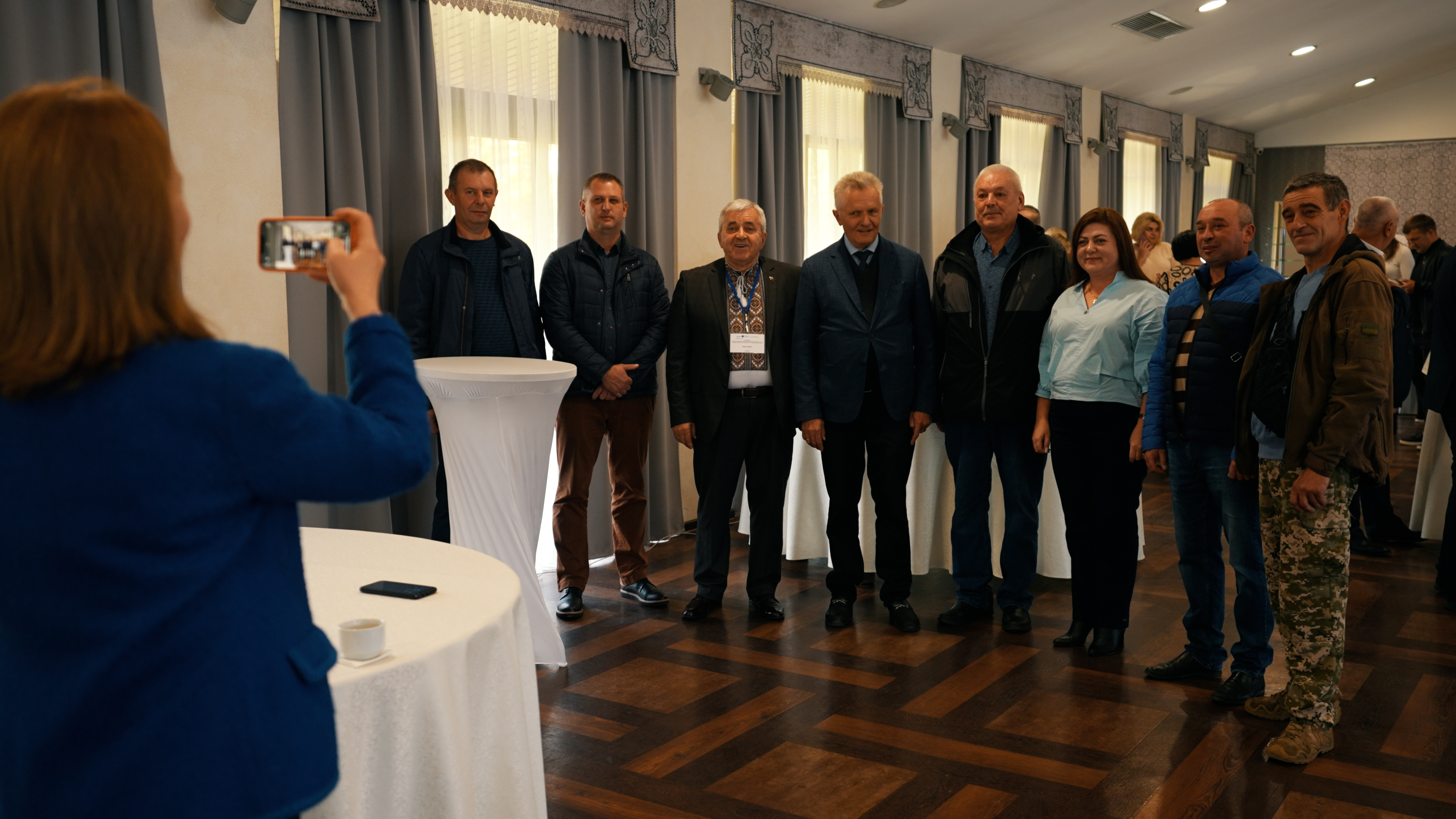
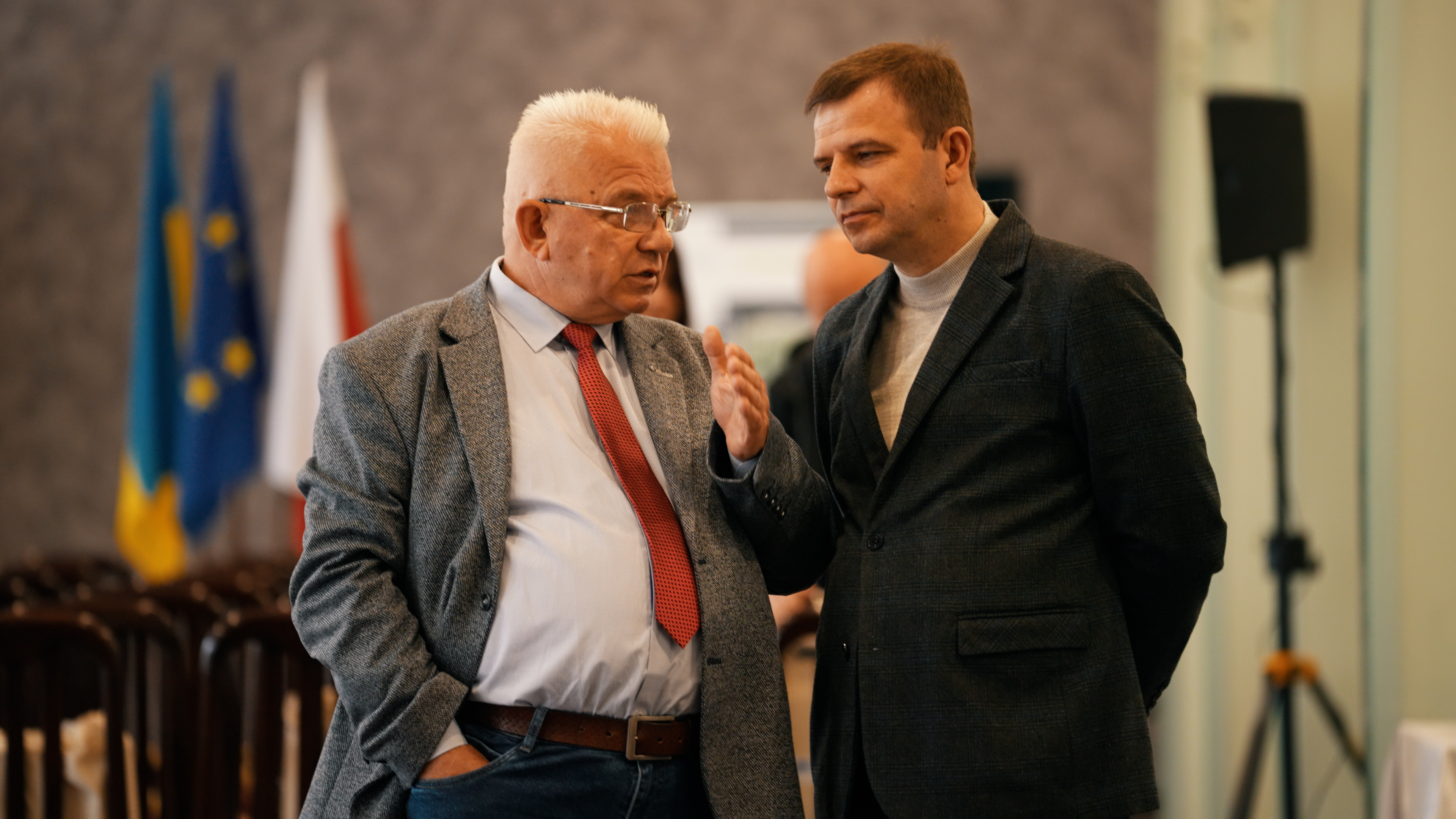
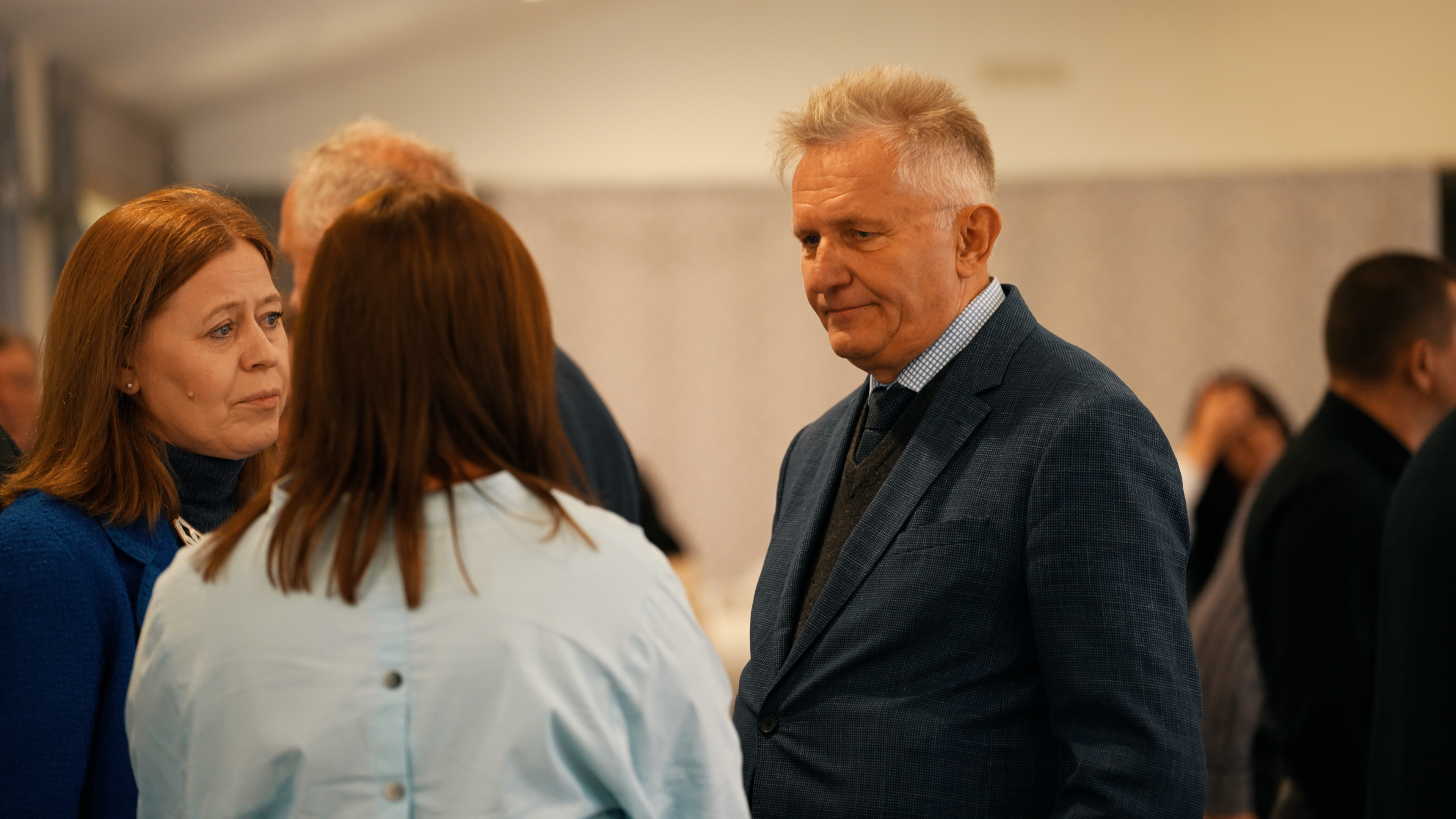
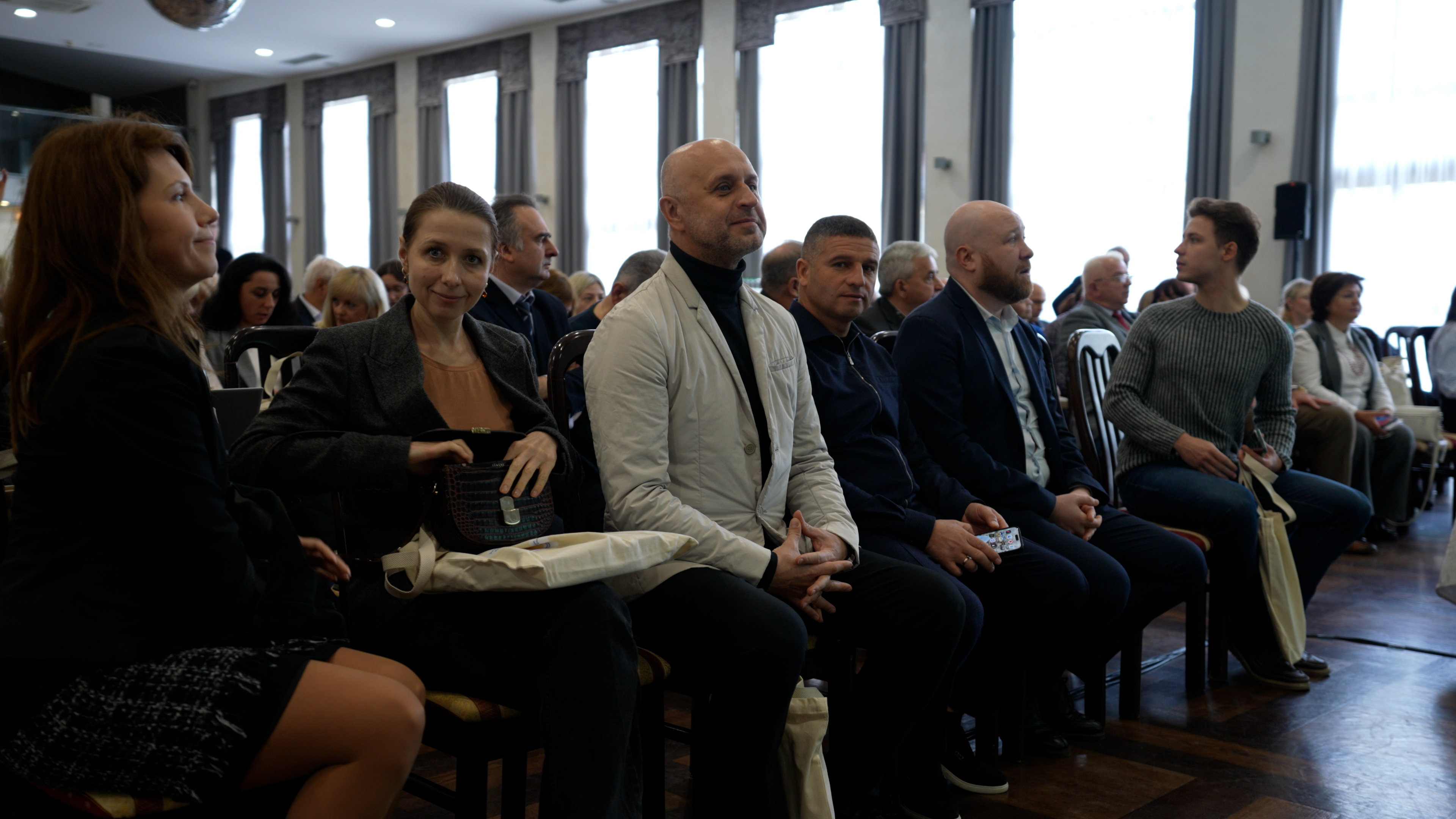
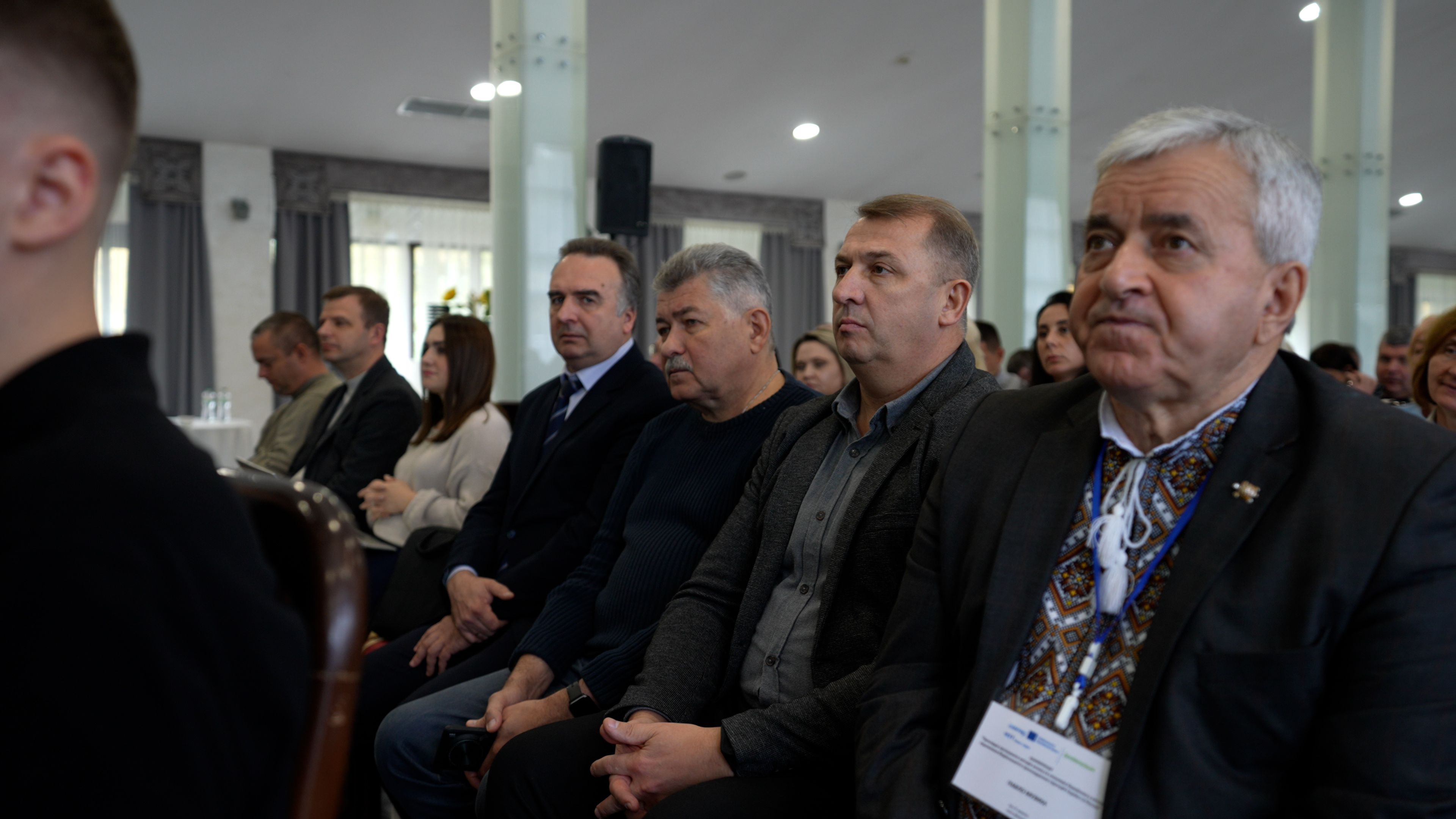
The conference is attended by scientists from Ukraine and Poland, representatives of executive authorities, local communities in the Lviv region, farmers and private landowners.
Lyudmyla Honcharenko, Director of the Department of Agro-Industrial Development at the Lviv Regional State Administration; Yurii Radeletskyi, Chair of the Standing Committee on Agribusiness, Entrepreneurship and Investment at the Lviv Regional Council; Ivan Parubchak, Rector of the S.Z. Gzhytskyi Lviv National University of Veterinary Medicine and Biotechnology; Vasyl Khimyak, Head of the Representative Office of the Joint Secretariat of the Interreg NEXT Poland–Ukraine 2021–2027 Programme; and heads of research institutions from Poland.
The conference, held in a hybrid format, brought together over 200 participants from both countries to discuss the search for effective methods of localising and eradicating hogweed, monitoring its spread, and restoring natural biodiversity in cleared areas.
During today’s session, researchers from the Maria Curie-Skłodowska University, the University of Life Sciences in Lublin, and the S. Z. Gżycki Lviv National University of Veterinary Medicine and Biotechnology addressed the following issues:
– the impact of the invasive Sosnowski’s hogweed on local biodiversity and the methodology of field research in Poland;
– population characteristics as factors describing its status and invasive potential;
– field methods for controlling and eradicating Sosnowski’s hogweed;
– the spread and damage caused by Sosnowski’s hogweed in Ukraine.
Active discussion of these issues took place during two panel discussions and in focus groups. The conference will continue tomorrow.