
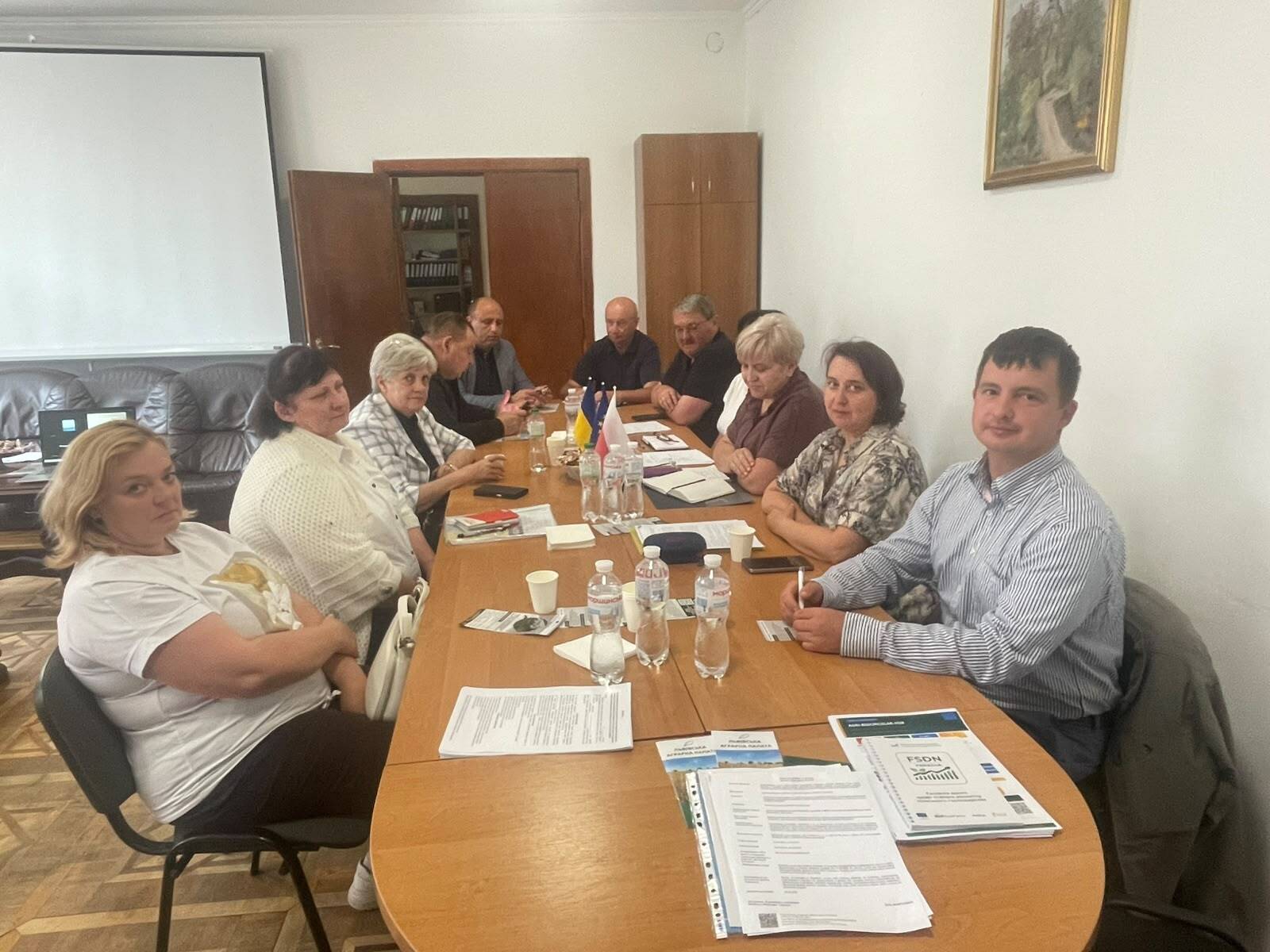
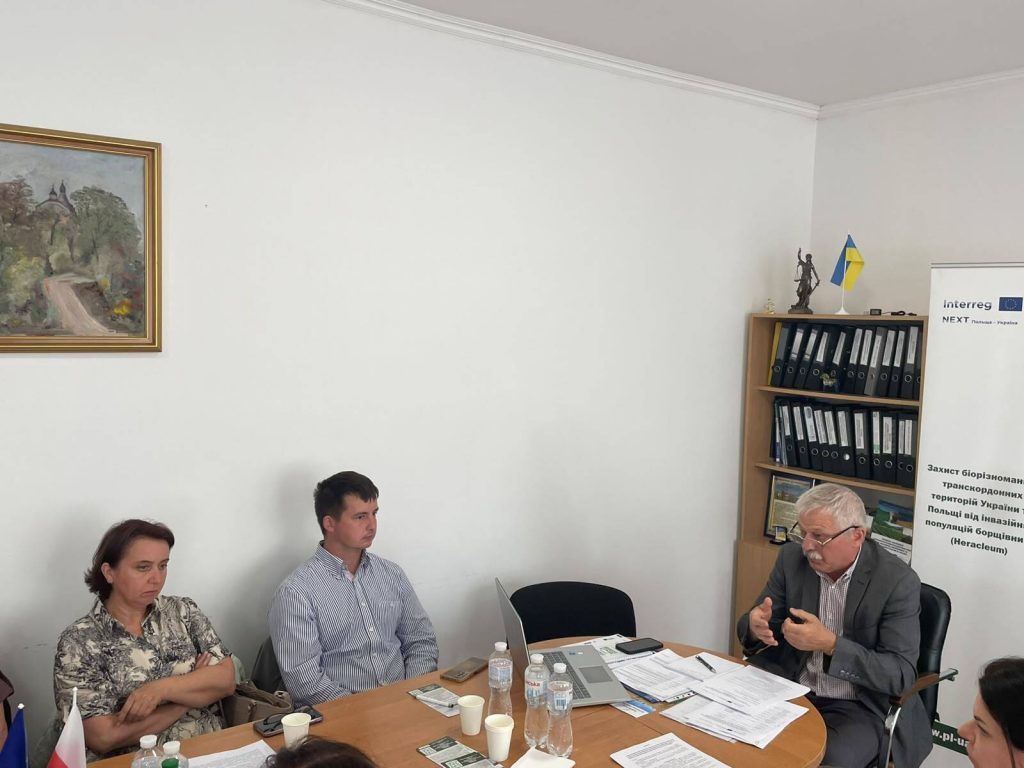
As part of the ZeroHeracleum project, ‘Protecting the biodiversity of cross-border areas in Ukraine and Poland from invasive populations of hogweed (Heracleum)’ (PLUA.01.03-IP.01-0008/23), funded by the European Union under the Interreg NEXT Poland–Ukraine Programme 2021–2027, the Lviv Agrarian Chamber held a working meeting with representatives of nine local authorities in the Lviv region – participants in the project.
In the run-up to the event, the Lviv Agrarian Chamber held consultations with the Main Directorate of the State Treasury Service of Ukraine in the Lviv region. Petro Mohylyak, Head of the Main Directorate of the State Treasury Service of Ukraine in the Lviv region, in order to ensure compliance with all the requirements of legislative and regulatory documents when reimbursing costs for hogweed eradication services, proposed that representatives of the State Treasury Service of Ukraine be included in the discussion of the reimbursement mechanism. Consequently, Marta Petryga, a specialist from the State Treasury Service of Ukraine in the Zaliznychnyi district of Lviv, took part in the meeting. The event was attended by the heads and staff of the Kozivska, Skolivska, Slavska, Borynska, Starosambirska, Strilkivska, Turka, Khyriv and Skhidnytsia territorial communities, as well as representatives of municipal enterprises directly providing services for the eradication of Sosnovsky’s hogweed.
To date, all nine communities have already received specialised machinery and equipment purchased as part of the project. Each community has been provided with a tractor, a plough, a road mower, hand-held petrol-powered mowers, battery-powered sprayers, as well as sets of personal protective equipment. As a result, municipal services are actively carrying out work to eradicate the invasive plant within their communities.
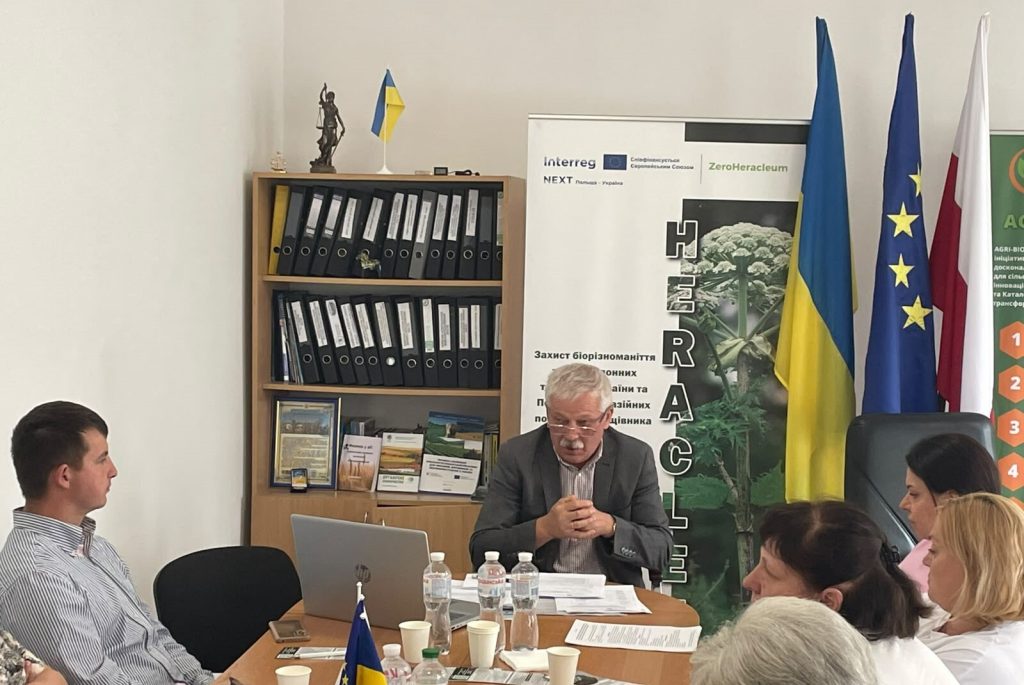
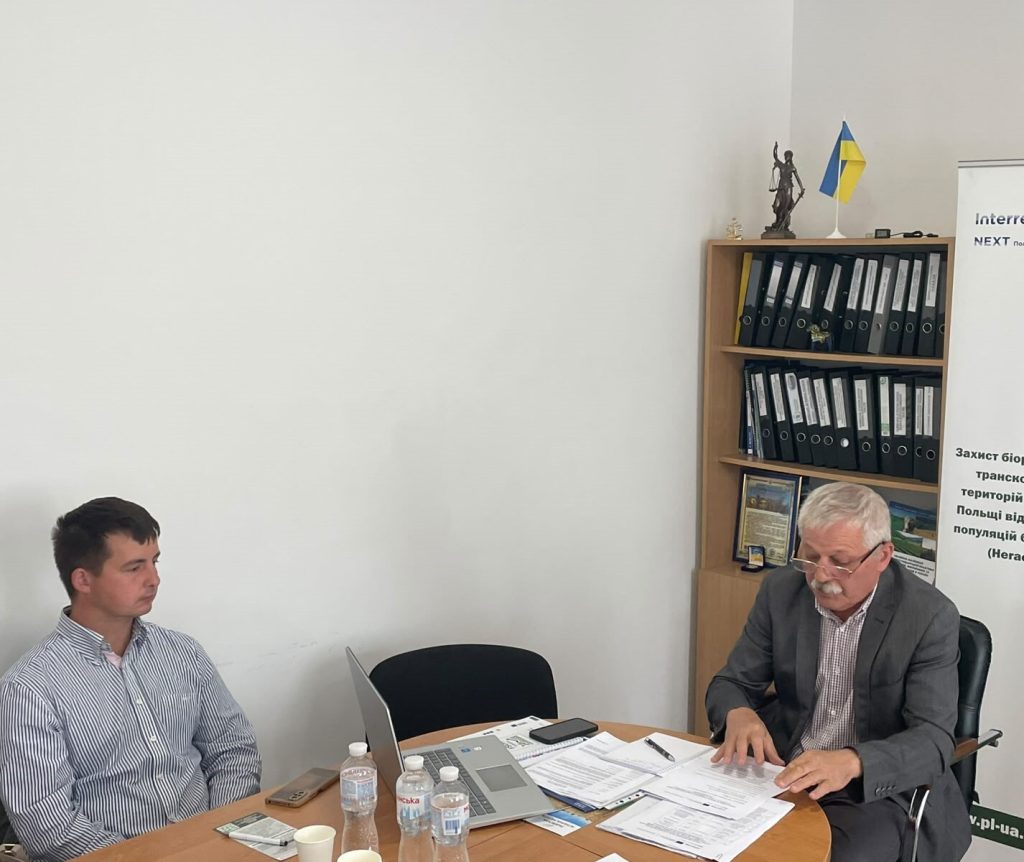
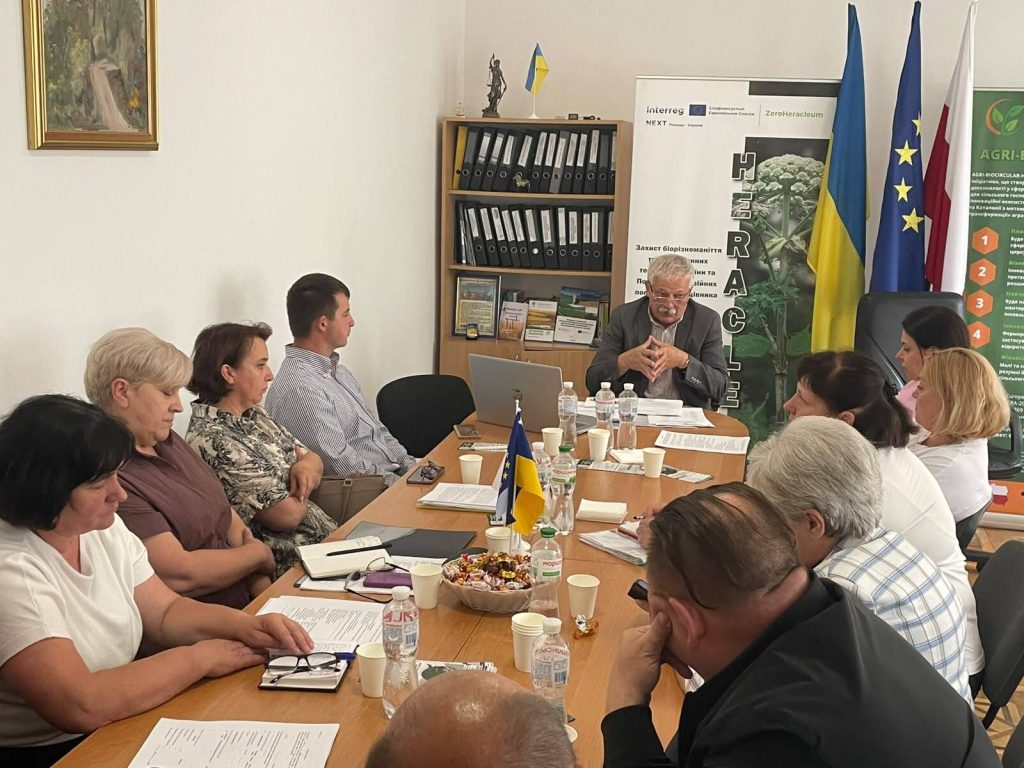
The main topic of the meeting was a discussion of the mechanism for reimbursing costs to municipal enterprises carrying out work to eradicate pockets of Sosnovsky’s hogweed. Participants examined the practical aspects of documenting the work carried out, verifying the costs incurred and securing further funding in accordance with the project’s requirements. During the meeting, Ihor Vuytsyk, Chair of the Lviv Agrarian Chamber, Deputy Chair Anna Kushchak and accountant Maria Kovalco presented their proposals on organising the process. They explained in detail the procedure for preparing the necessary documentation, the mechanism for cooperation between project participants, and the specifics of the financial support for the cost reimbursement process.
Following the discussion, the participants reached a joint decision to conclude tripartite agreements between the Lviv Agrarian Chamber, the relevant local authority and the municipal enterprise carrying out the work to eradicate Sosnovsky’s hogweed. It is precisely this mechanism that will form the basis for the subsequent reimbursement of costs to municipal enterprises and will ensure transparency, proper financial control and the effective implementation of the project’s measures. The ZeroHeracleum project aims to preserve biodiversity in the border regions of Ukraine and Poland through the systematic control of invasive populations of Sosnowski’s hogweed. An important component of this work is the close cooperation between the Lviv Agrarian Chamber and local communities, which are directly carrying out practical measures to identify and eradicate this dangerous plant.
Source: Lviv Agrarian Chamber
The content of this publication is the sole responsibility of the authors and can in no way be taken to reflect the views of the European Union.
Find out more about the 𝙕𝙚𝙧𝙤𝙃𝙚𝙧𝙖𝙘𝙡𝙚𝙪𝙢 project
Interreg NEXT Poland – Ukraine
#EU#funds#InterregNEXT#Interreg#CBC#Programme#PL_UA#ZeroHeracleum