
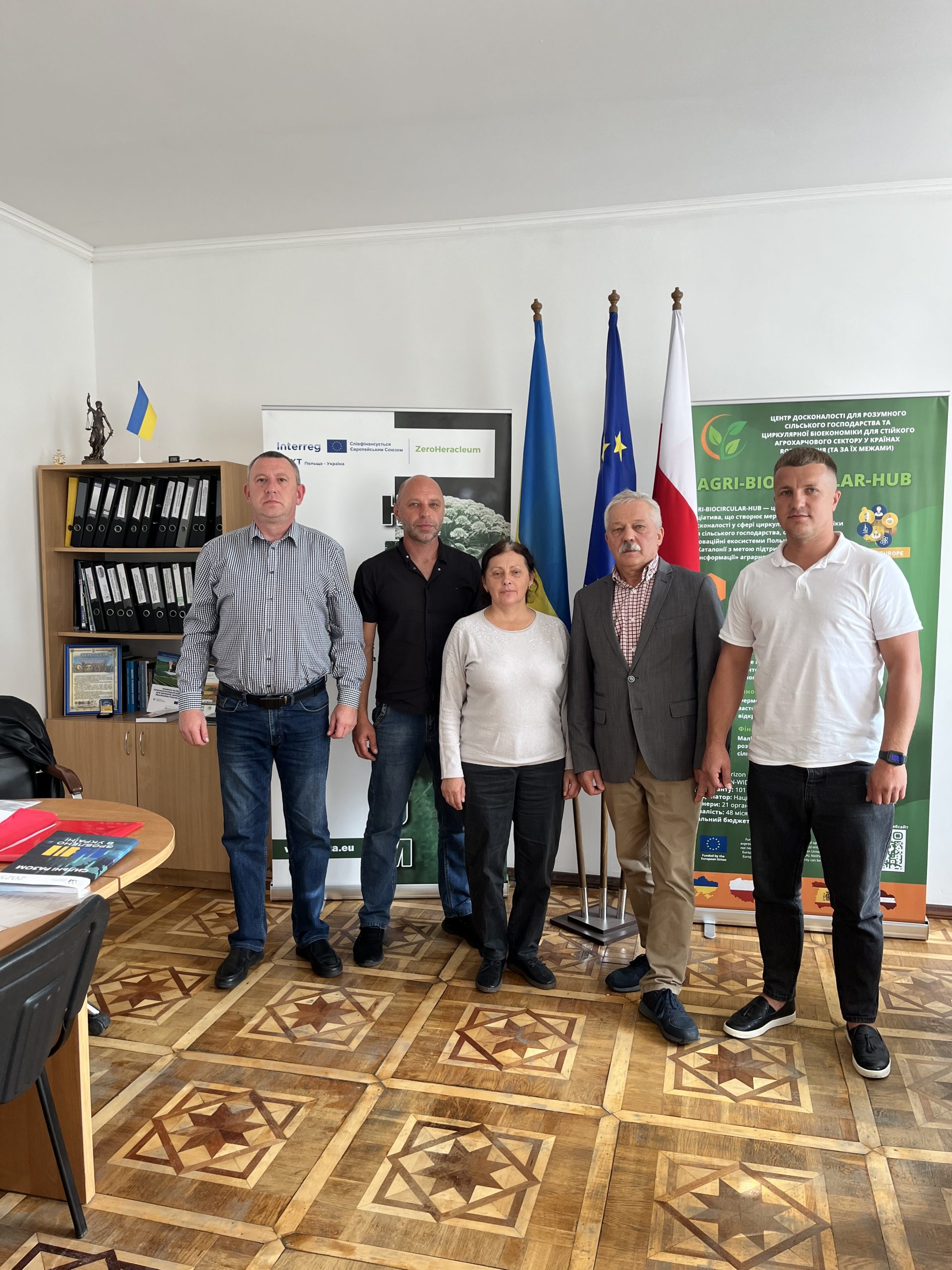
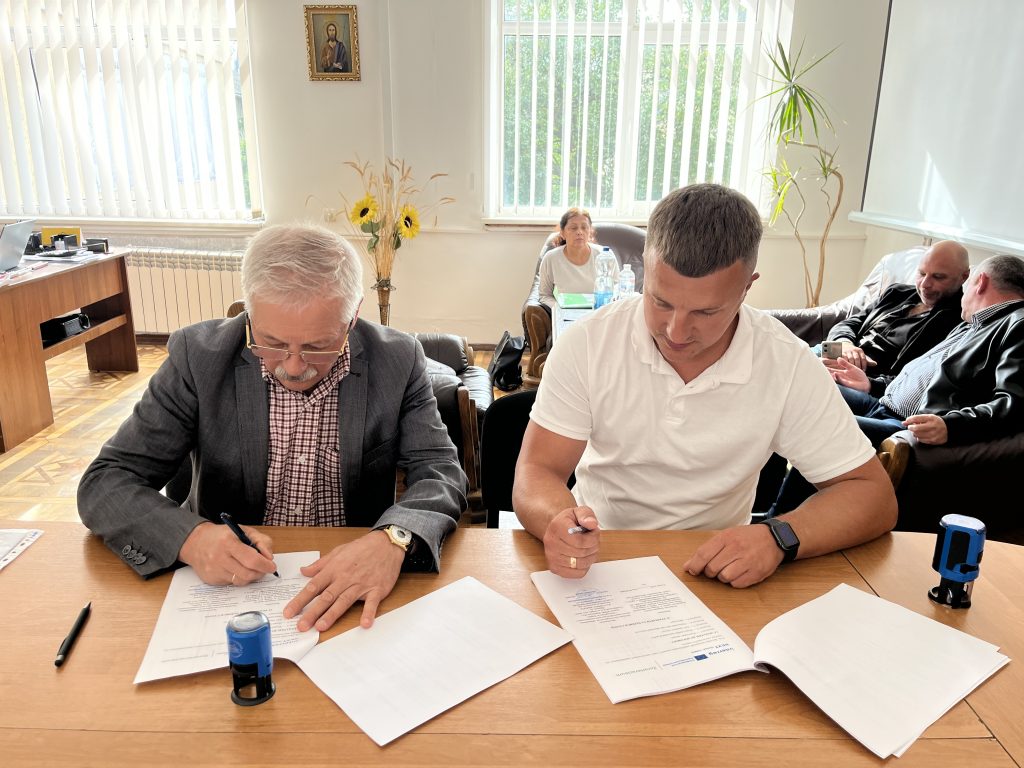
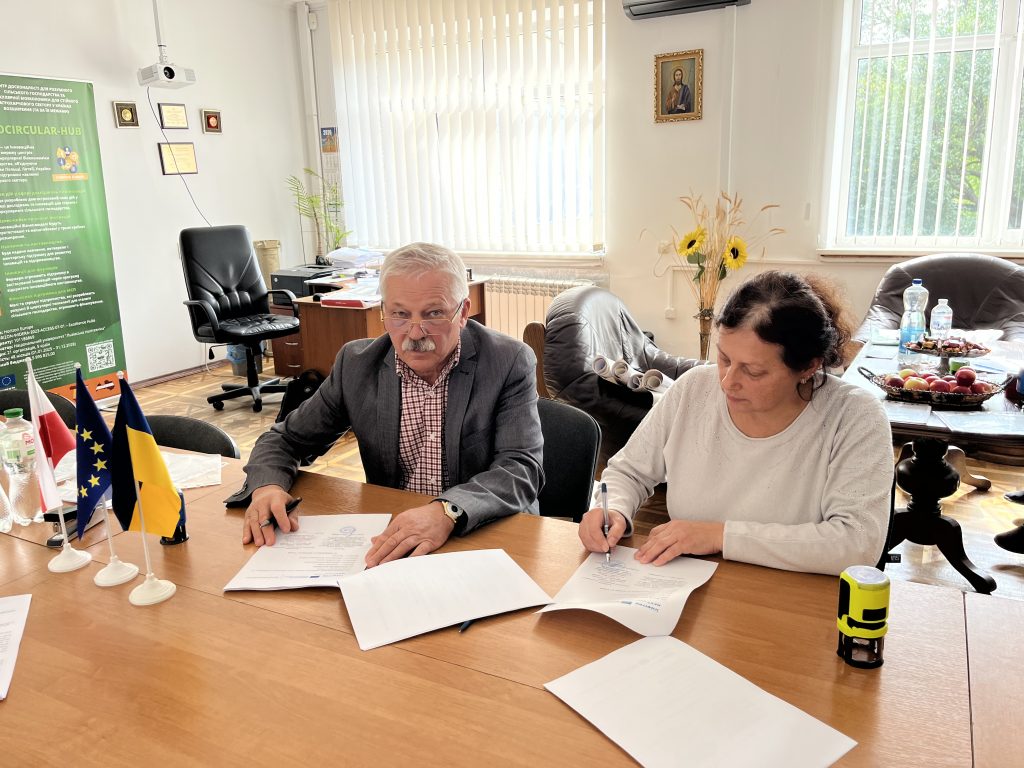
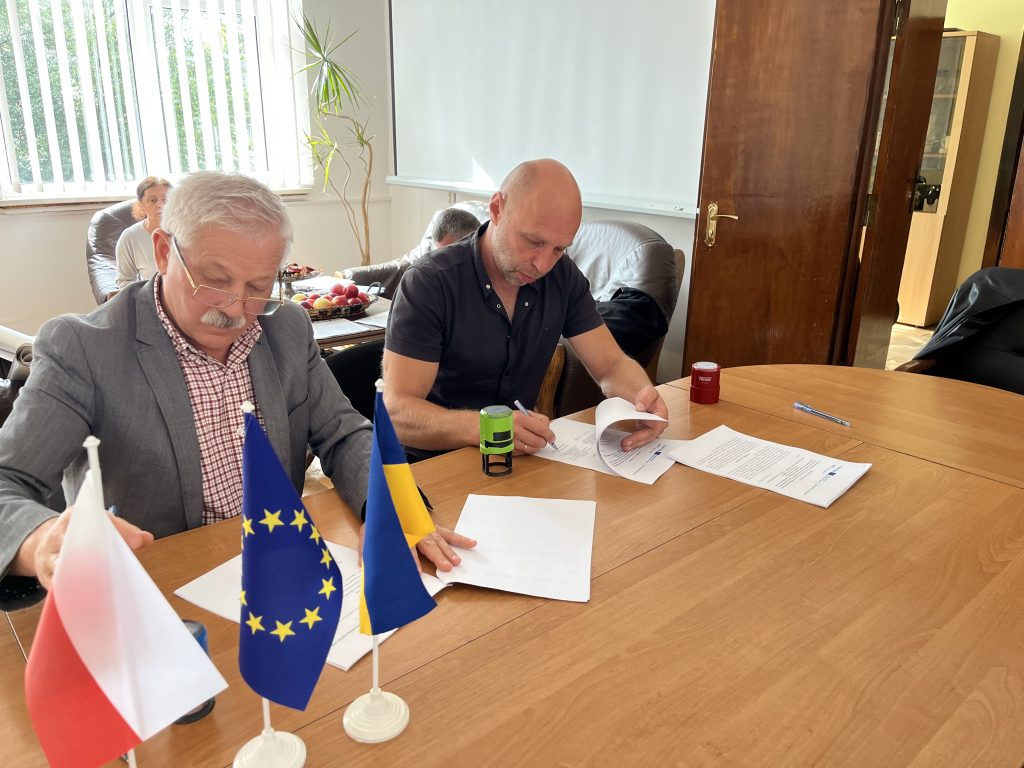
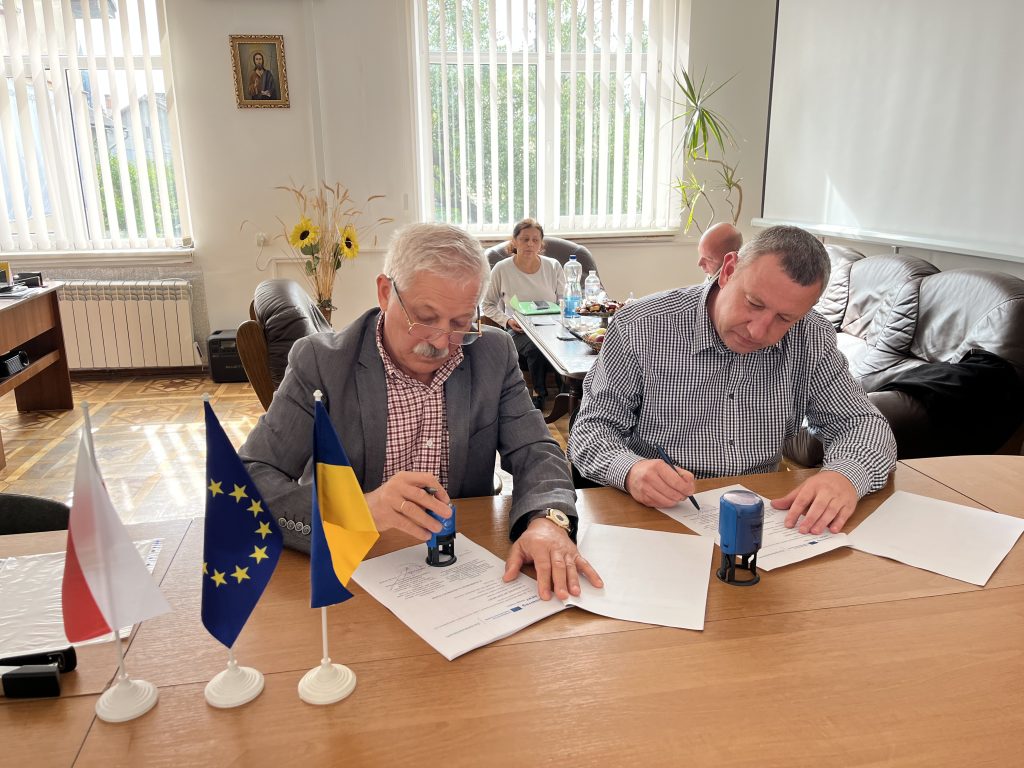
On 11 September, the municipal utilities of eight target communities participating in the ZeroHeracleum project, ‘Protecting the biodiversity of cross-border territories in Ukraine and Poland from invasive populations of hogweed (Heracleum)’, signed agreements with the Lviv Agrarian Chamber for the reimbursement of funds spent on eradicating hogweed within their communities.
Under the agreements, each municipal enterprise undertakes to clear at least 110 hectares of affected land within their communities of this invasive plant. To this end, the municipal enterprises have received the necessary machinery, equipment and personal protective equipment as part of the project.
The Lviv Agrarian Chamber plans to reimburse each municipal enterprise for services relating to the eradication of hogweed across an area of 110 hectares, with funds totalling over 1 million hryvnias.
It should be noted that this year, five municipal enterprises have actively begun clearing the affected areas and will therefore be eligible for compensation totalling nearly half a million hryvnias. These include, in particular, the municipal enterprise ‘Staryi Sambir City Housing and Utilities Production Department’, the municipal enterprise ‘Turkiv Housing and Utilities Department’, the municipal enterprise ‘Khyriv Municipal Housing and Utilities Administration’, the municipal enterprise ‘Housing and Utilities of the Borynska Settlement Council’, and the municipal enterprise ‘Blahoustriy’ of the Strilkivska Village Council.
As nine local communities are participating in the project, a further four municipal enterprises were unable to complete the tasks of eradicating hogweed, but have undertaken to clear the planned 110 hectares of affected land during next year’s growing season.
The fight against invasive plants is not the same as weeding, nor is it merely a problem for botanists. It is about protecting Ukrainian land, biodiversity, people’s health and the future of rural communities; it is a matter of food security. That is precisely why we cannot delay the eradication of Sosnovsky’s hogweed, especially during wartime. After all, Ukraine’s post-war recovery must involve not only rebuilding what has been destroyed, but also restoring the biodiversity and ecological resilience of our territories.
The content of this publication is the sole responsibility of the authors and can under no circumstances be taken to reflect the position of the European Union. Show less
Source: Lviv Agrarian Chamber.
Find out more about the 𝙕𝙚𝙧𝙤𝙃𝙚𝙧𝙖𝙘𝙡𝙚𝙪𝙢 project
Interreg NEXT Poland – Ukraine
#EU #funds #InterregNEXT #Interreg #CBC #Programme #PL_UA #ZeroHeracleum