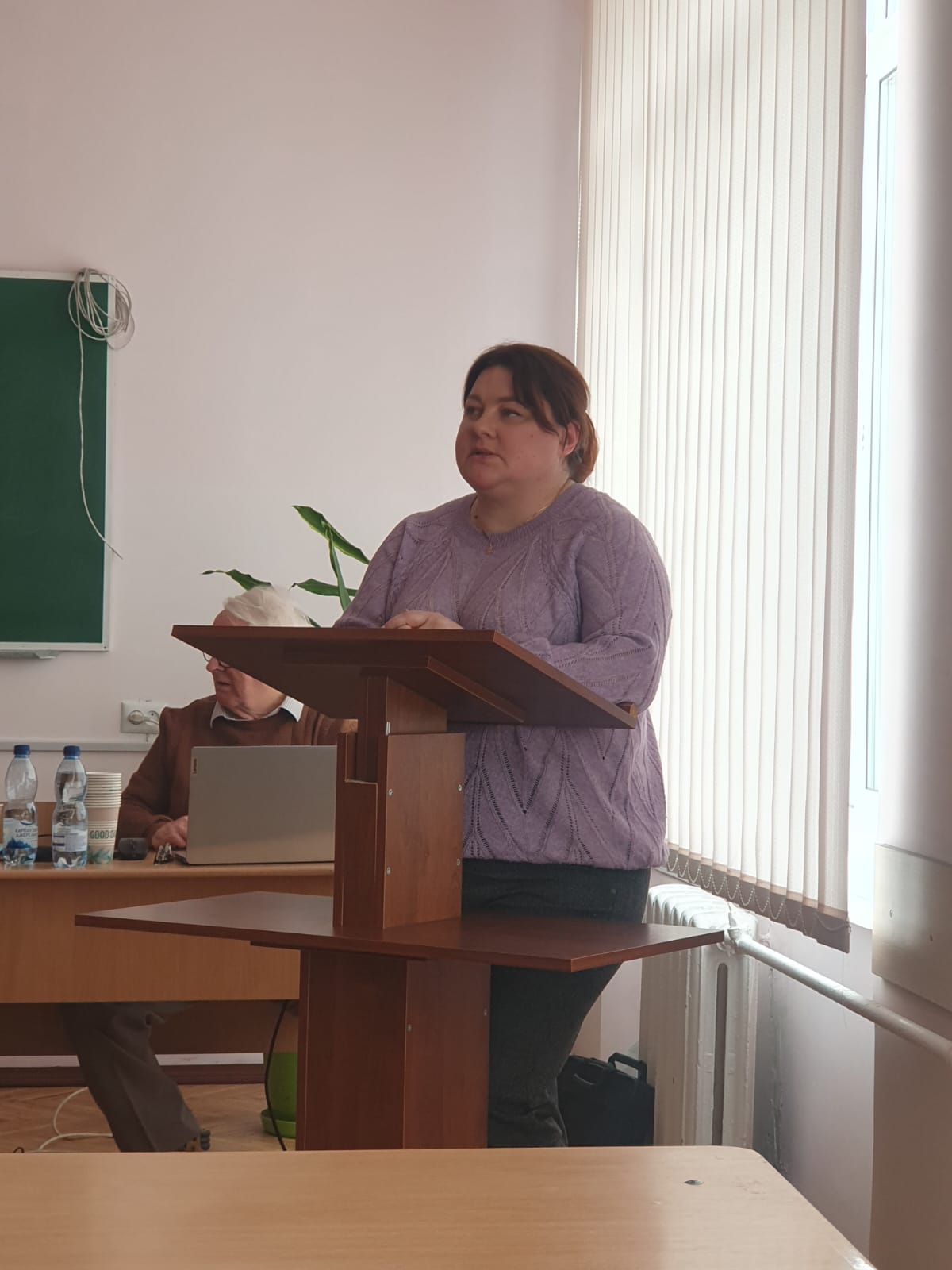
Today, 21 March, a two-day training course on providing modern advisory services within fruit and vegetable value chains began at Lviv National University of Natural Resources.
The event is taking place with the support of the Department of Agro-Industrial Development of the Lviv Regional State Administration and the Lviv Agrarian Chamber as part of the EU project ‘Institutional and Policy Reform of Small-Scale Agriculture in Ukraine’ (IPRSA).
The Director of the Department of Agro-Industrial Development of the Lviv Regional State Administration addressed the participants with a welcoming speech, in which she emphasised the importance of developing advisory services in the current agricultural landscape.
“The increase in requests from farmers for advisory services demonstrates the constant need for professional support and consultation. In a rapidly changing market environment, with technological innovations and evolving consumer demands, farmers feel the need for ongoing support from experts across various sectors of agriculture. This growing interest in advisory services demonstrates farmers’ awareness of the importance of maintaining competitiveness and successfully adapting to changes in the agricultural sector. “Such training sessions on advisory services led by representatives from European countries will help Lviv’s agricultural advisers gain access to information on best practices, the latest methods and tools that can be adapted and applied in their own work with farmers,” emphasised Tetiana Hetman.
Ihor Vuytsyk, Chairman of the Board, outlined the main areas of advisory work carried out by the Lviv Agrarian Chamber to those present. “The advisory service of the Lviv Agrarian Chamber already comprises 25 professional advisors and expert advisors working in the fields of agronomy, plant protection, aquaculture, accounting, management, marketing, business planning, land use, legal services, and more. Already this year, nearly 25 farms, family-run businesses and individuals planning to start their own businesses have approached them for professional services. Advisory services are in high demand, so the advisers themselves must be highly professional and constantly learn and improve their qualifications,” noted Ihor Vuytsyk
During the event, IPRSA project representatives Richard Rozwadowski, Graham Dale and Kateryna Krykunenko briefed participants on:
– the implementation of the AKIS system for the dissemination of agricultural knowledge and innovation;
– methods of growing and protecting fruit and vegetable produce;
– planting technologies, varieties and the specifics of growing and caring for organic berries;
– opportunities for using artificial intelligence (AI) to improve consultancy and advisory services.
The training will continue on 22 March.