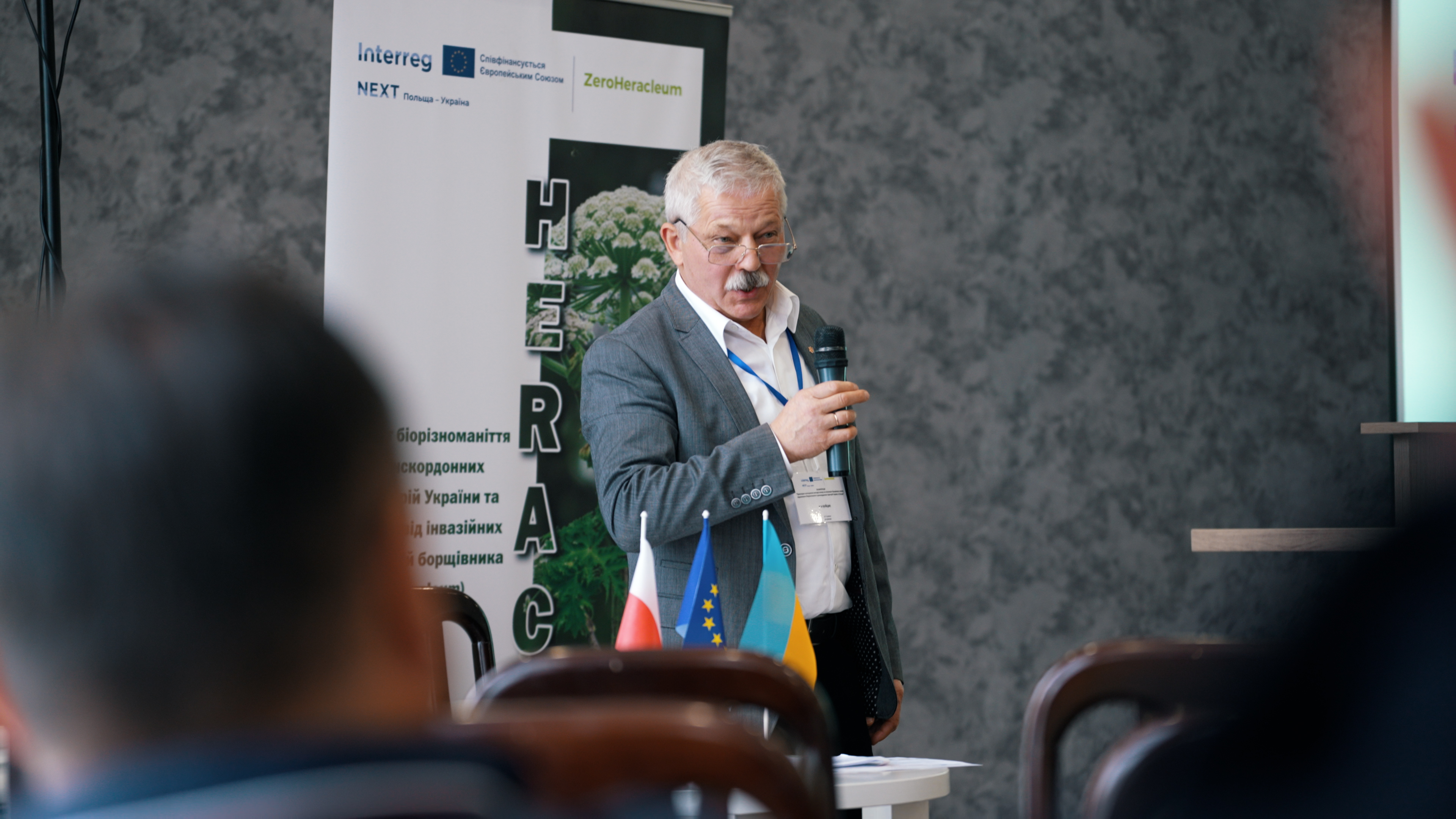
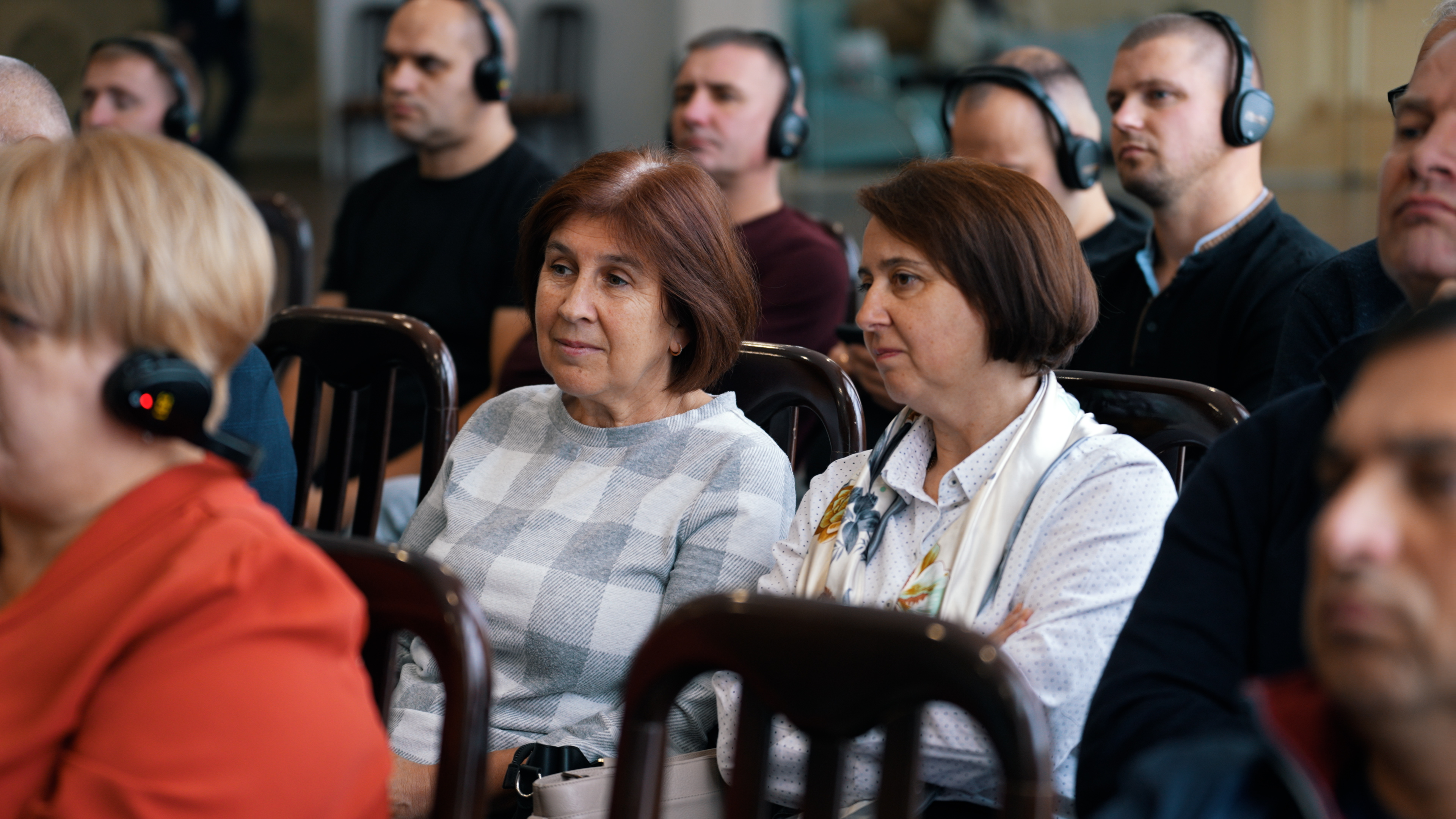
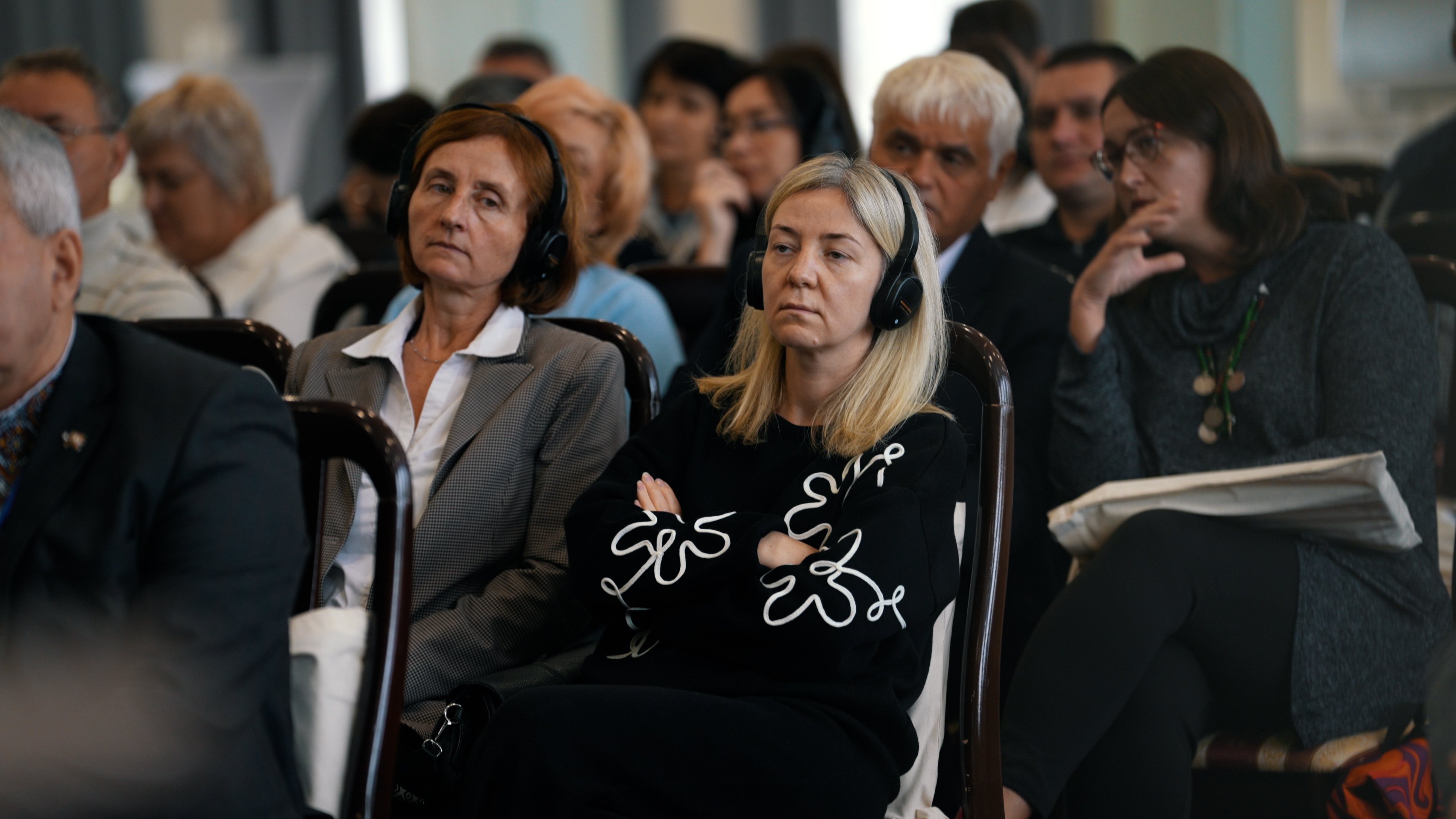
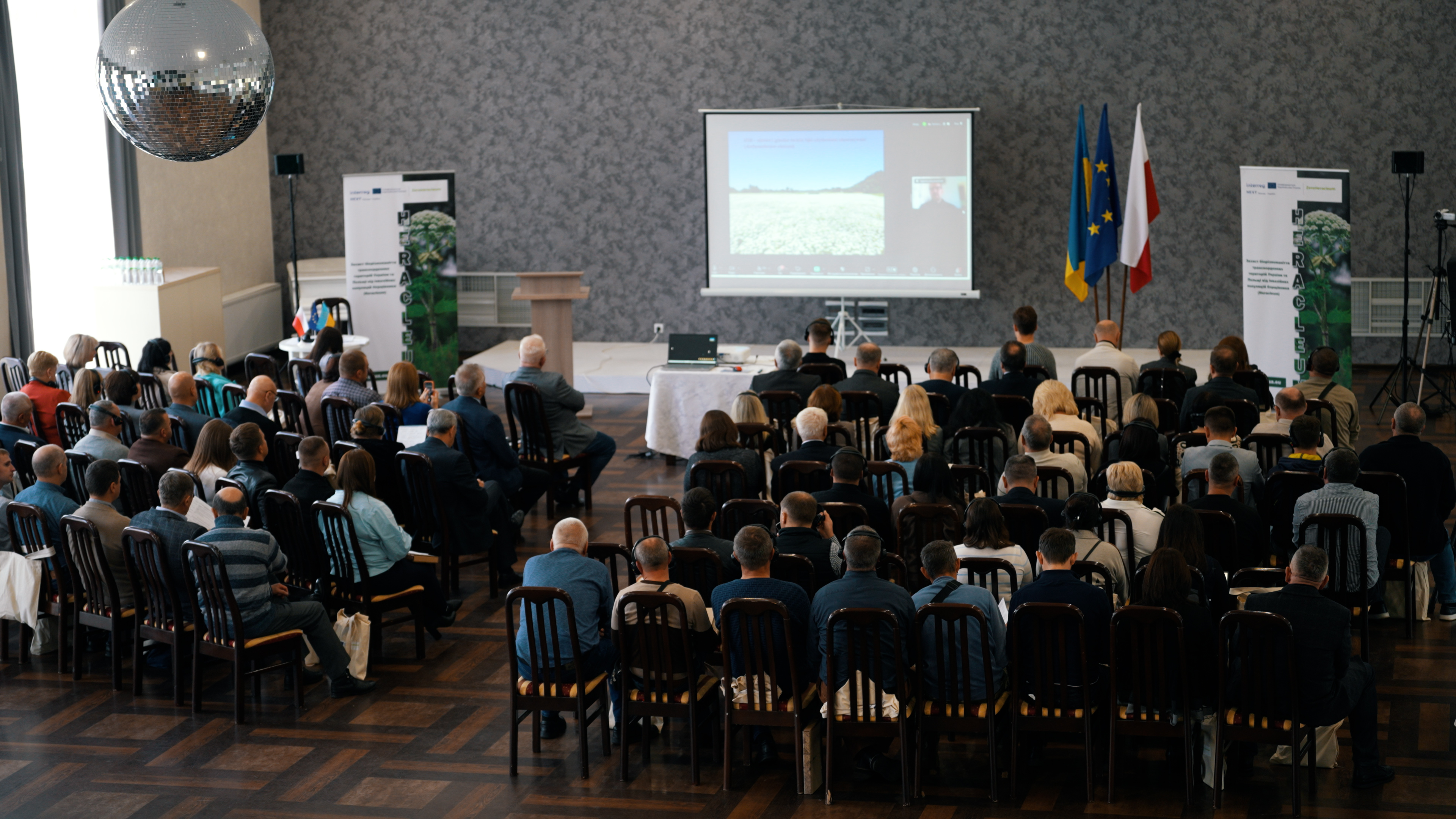
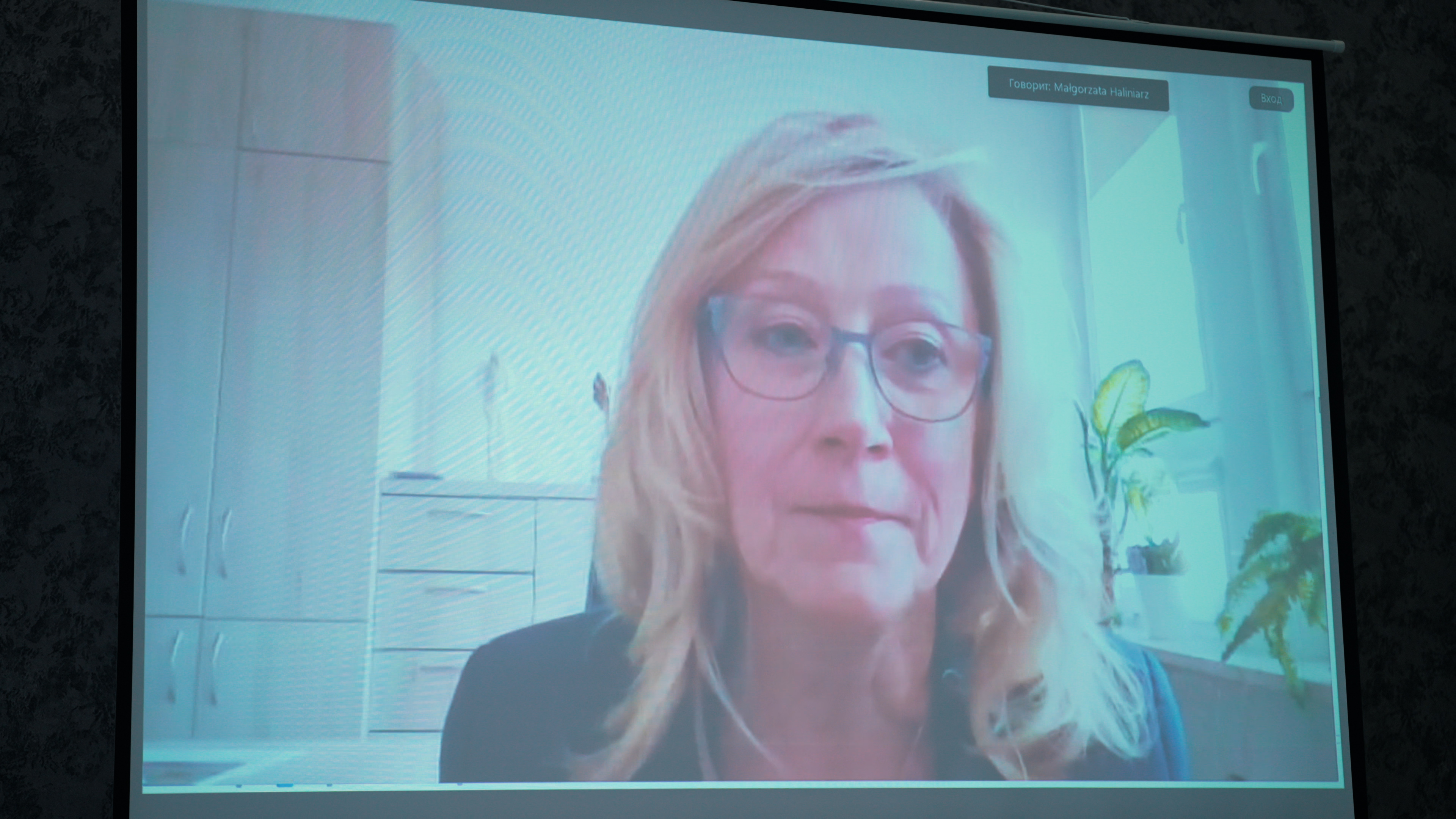
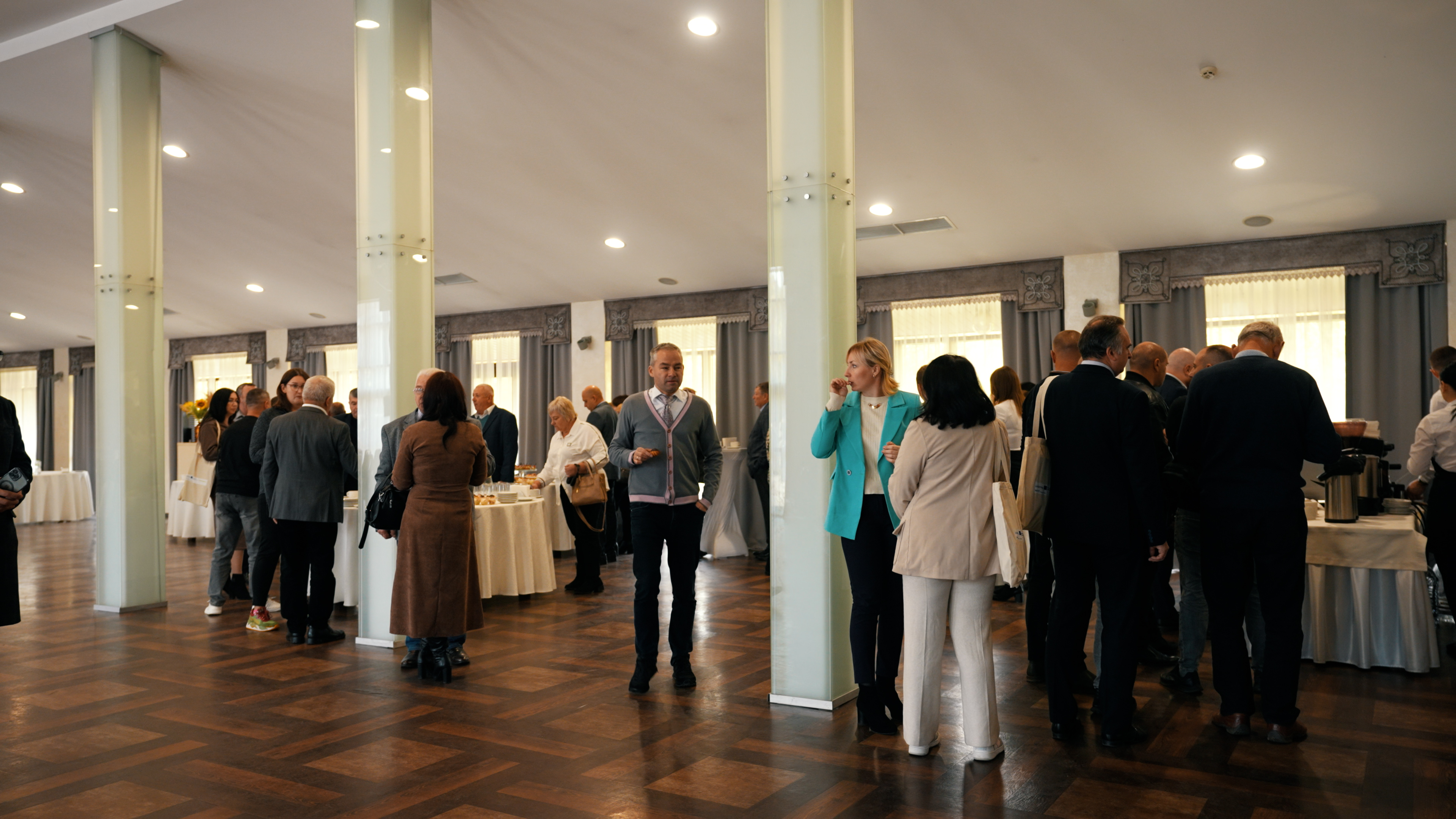
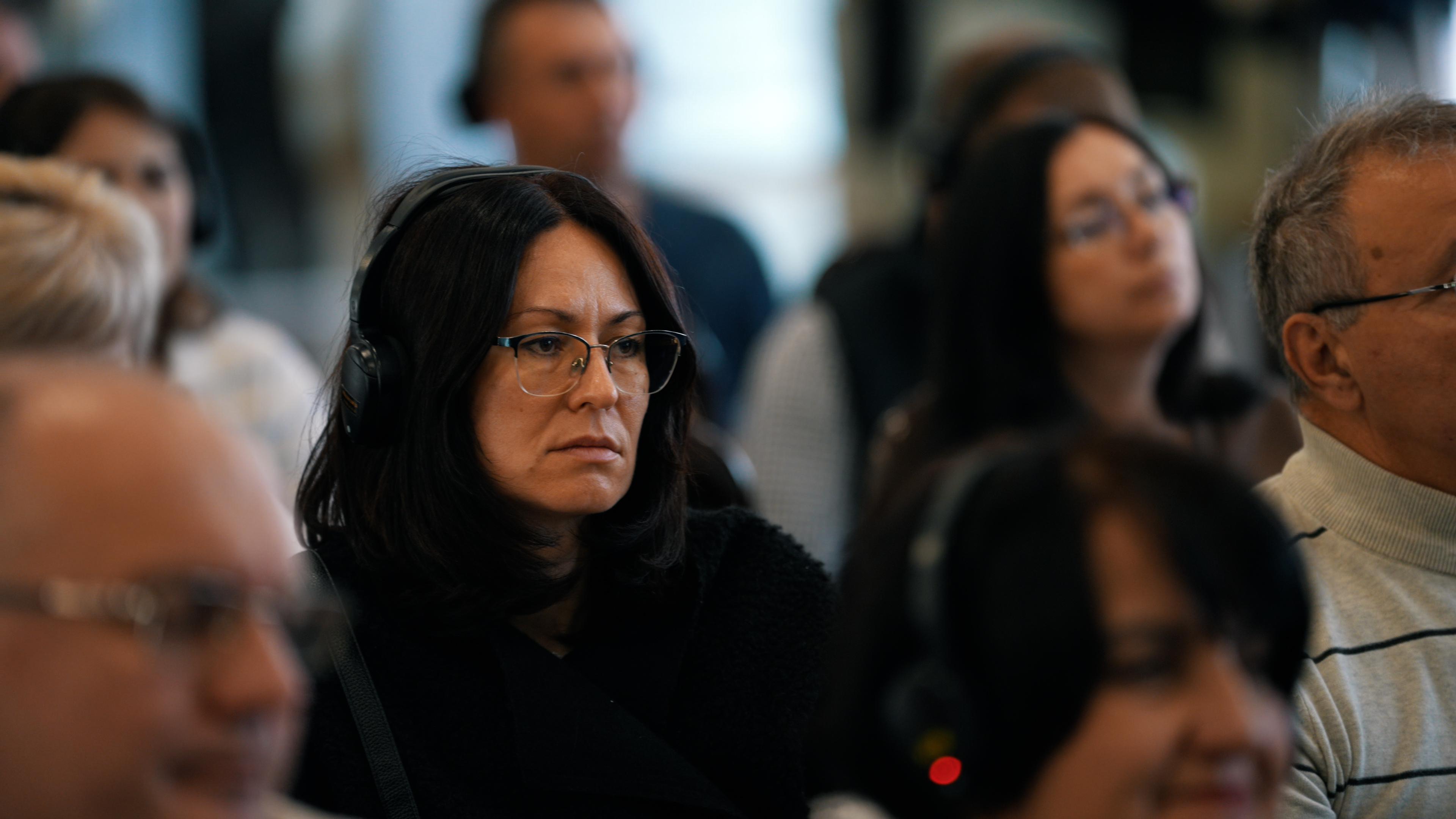
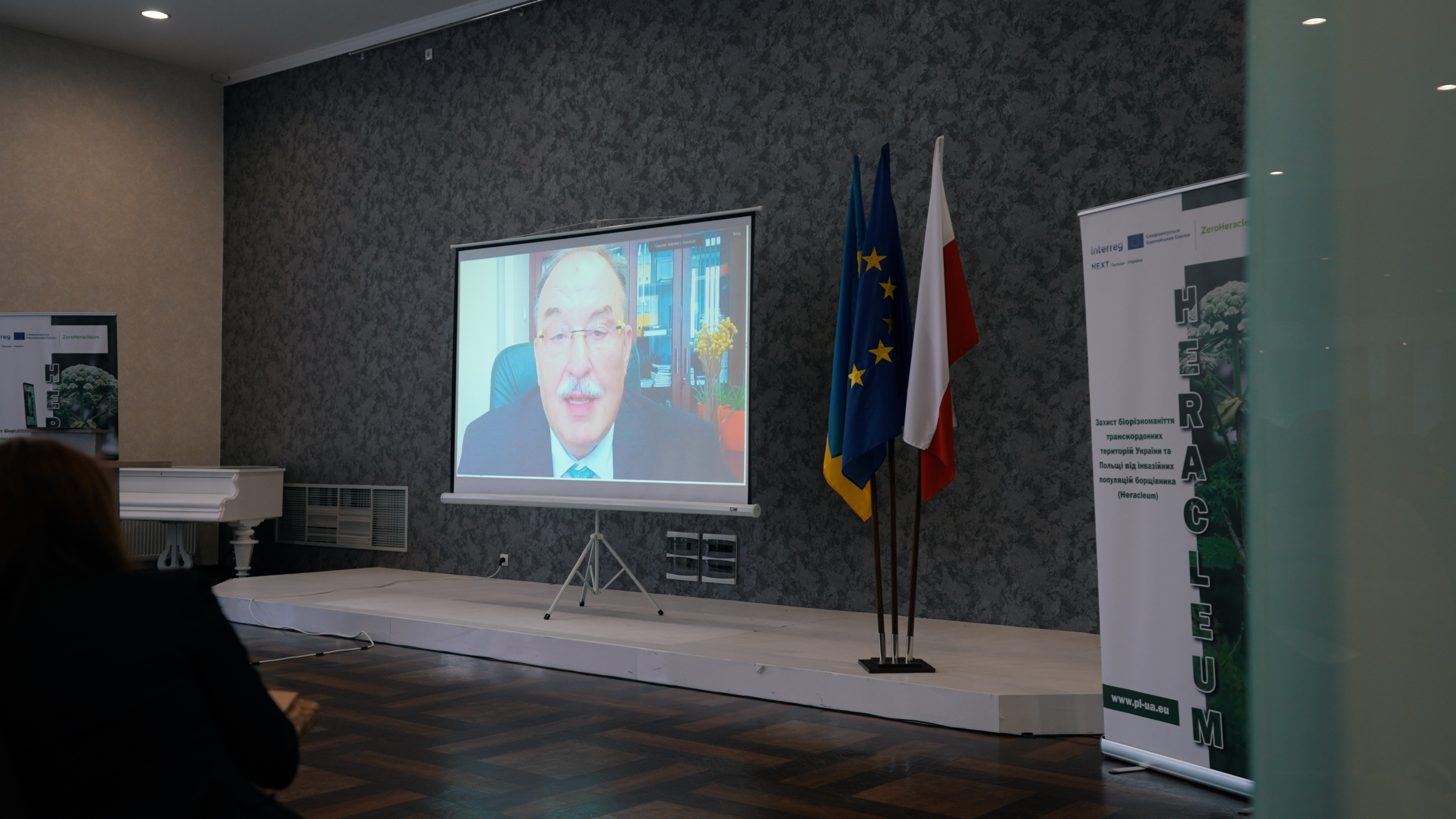
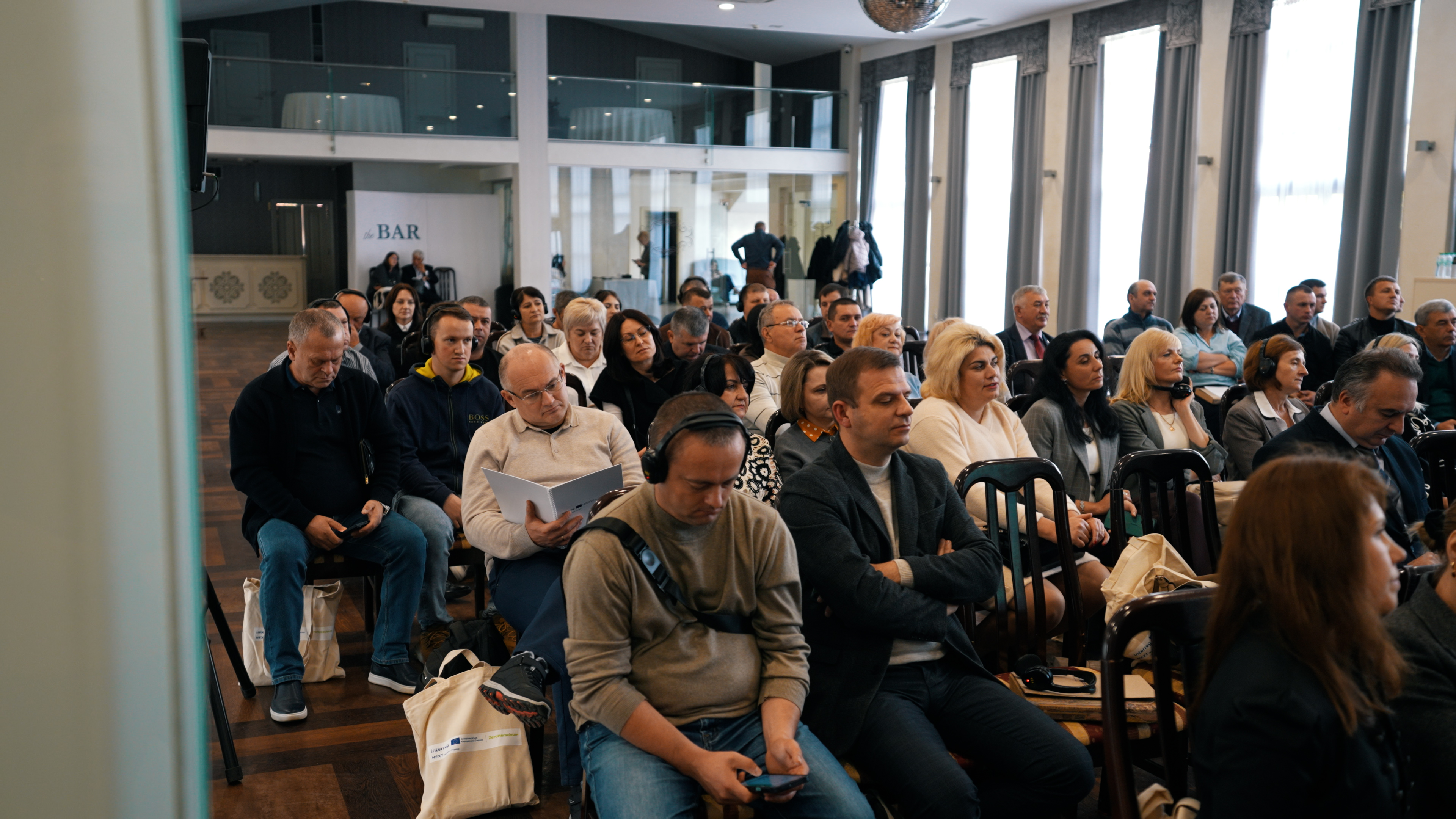
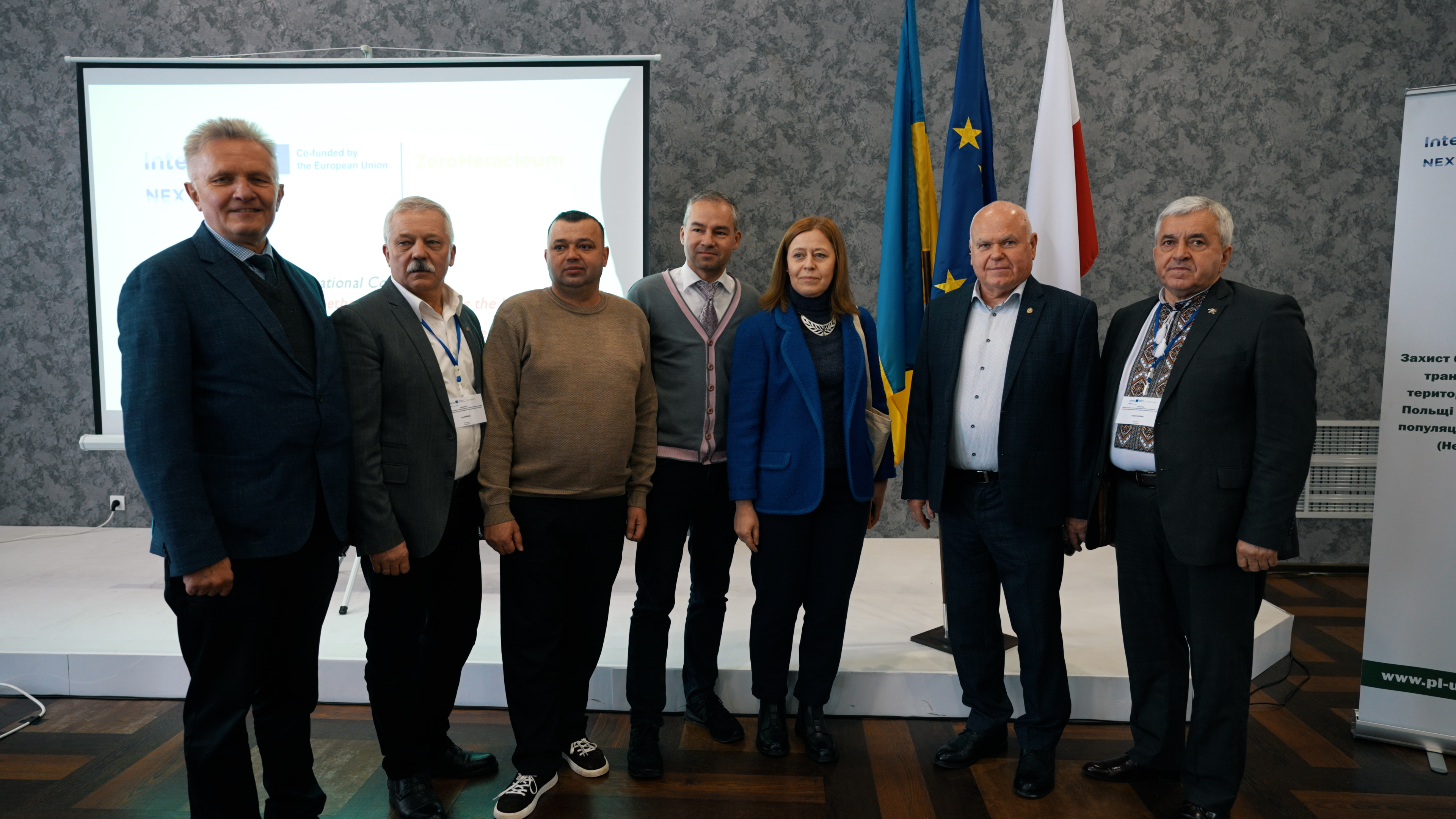
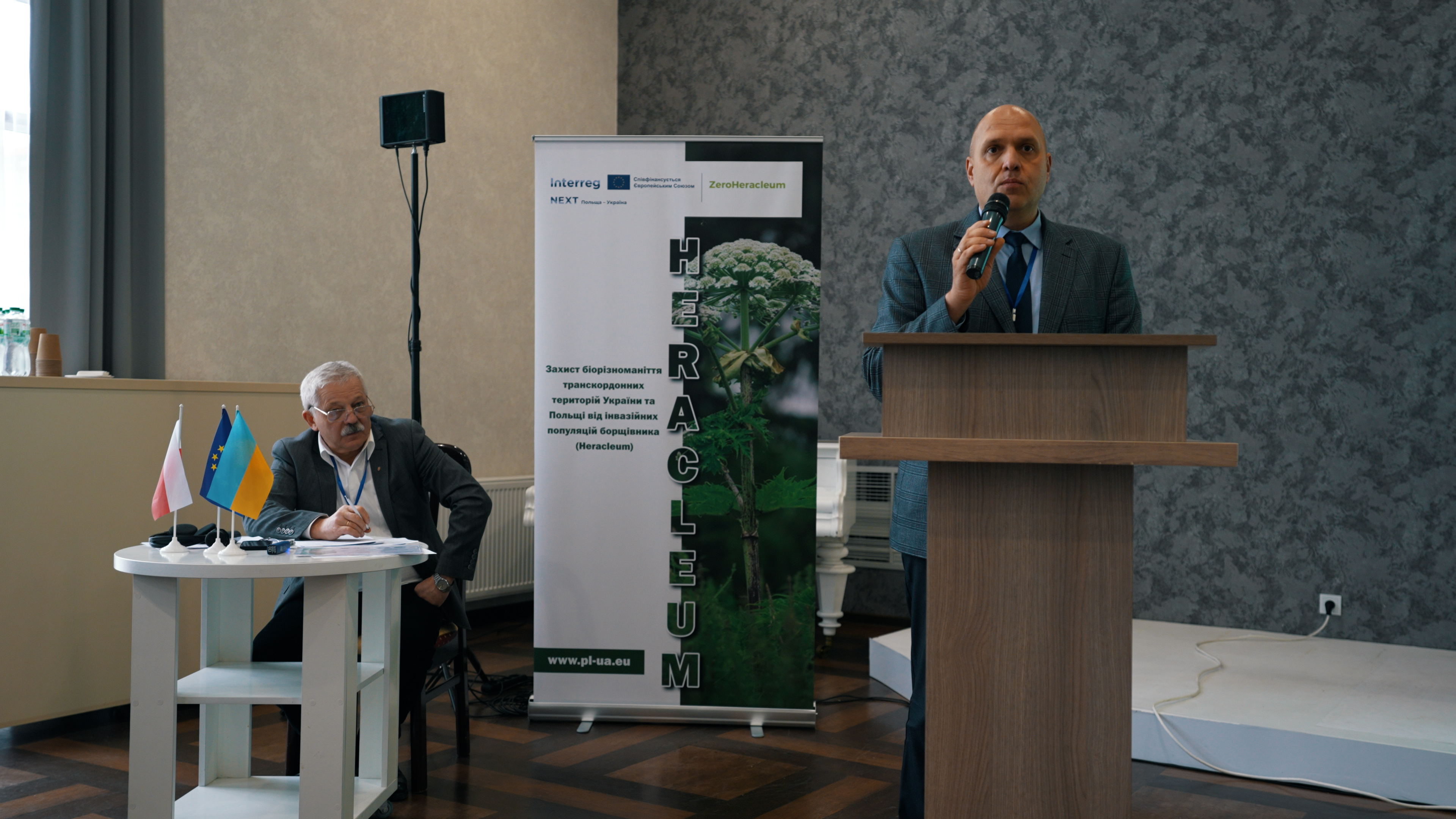
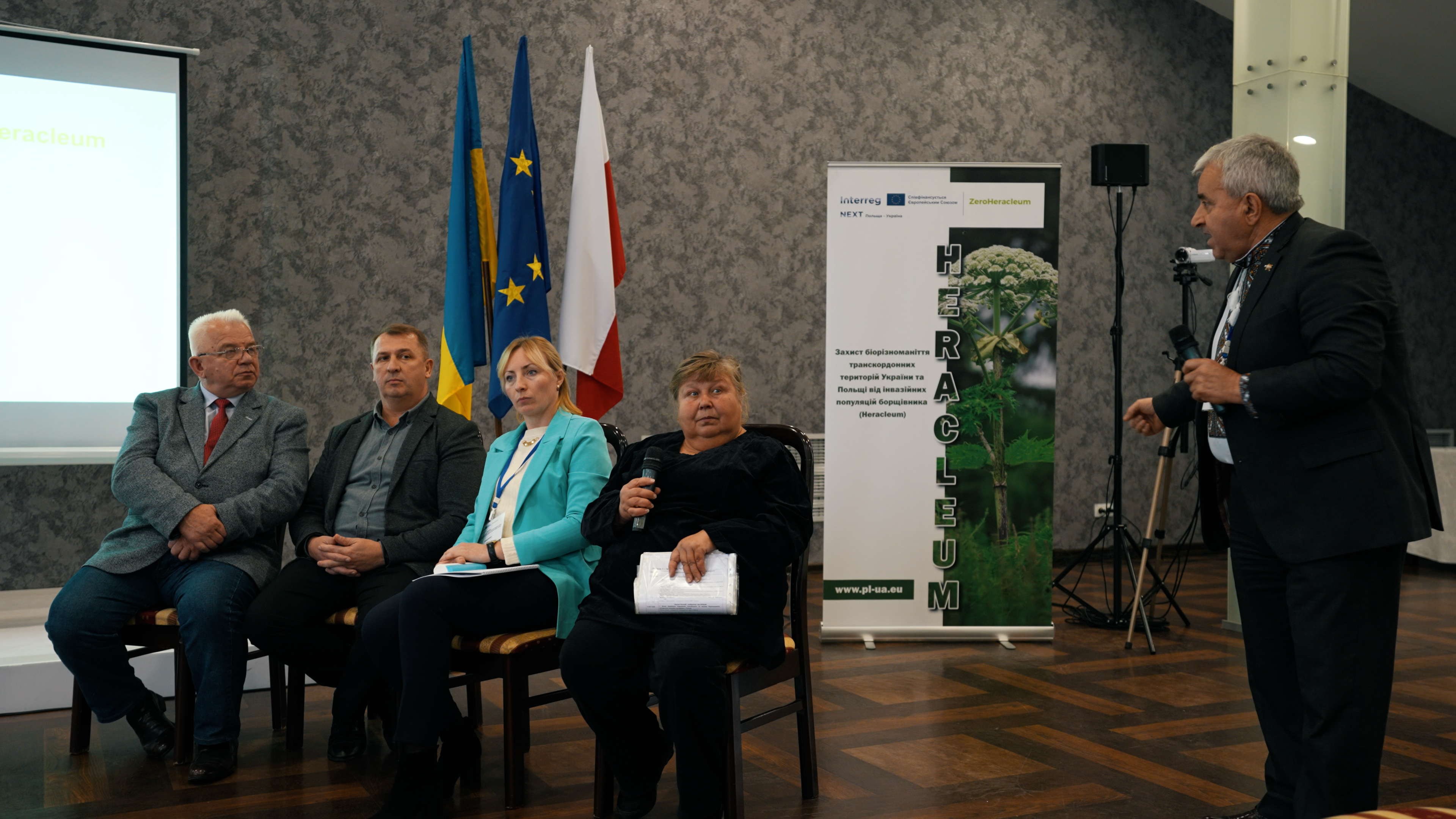
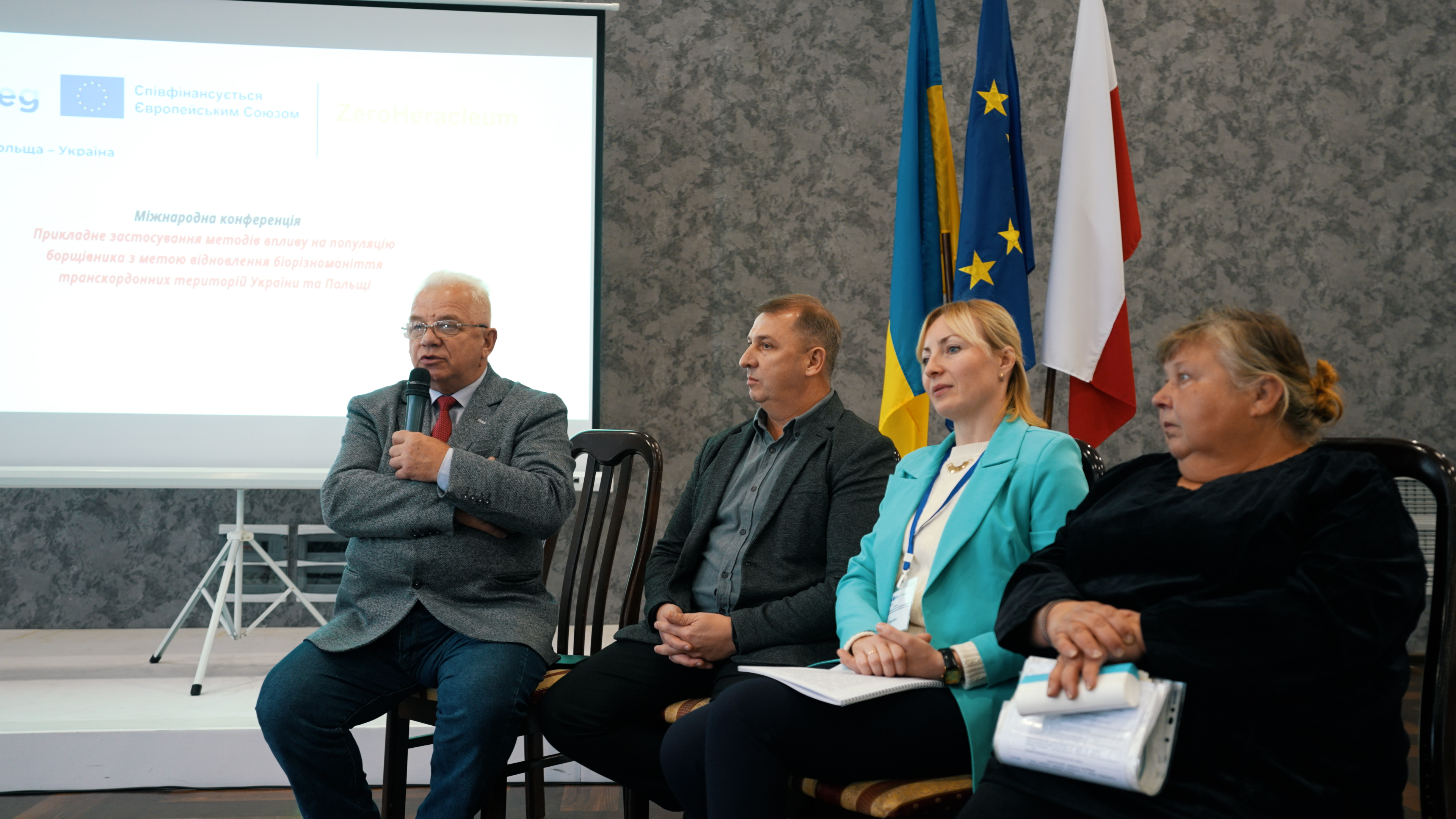
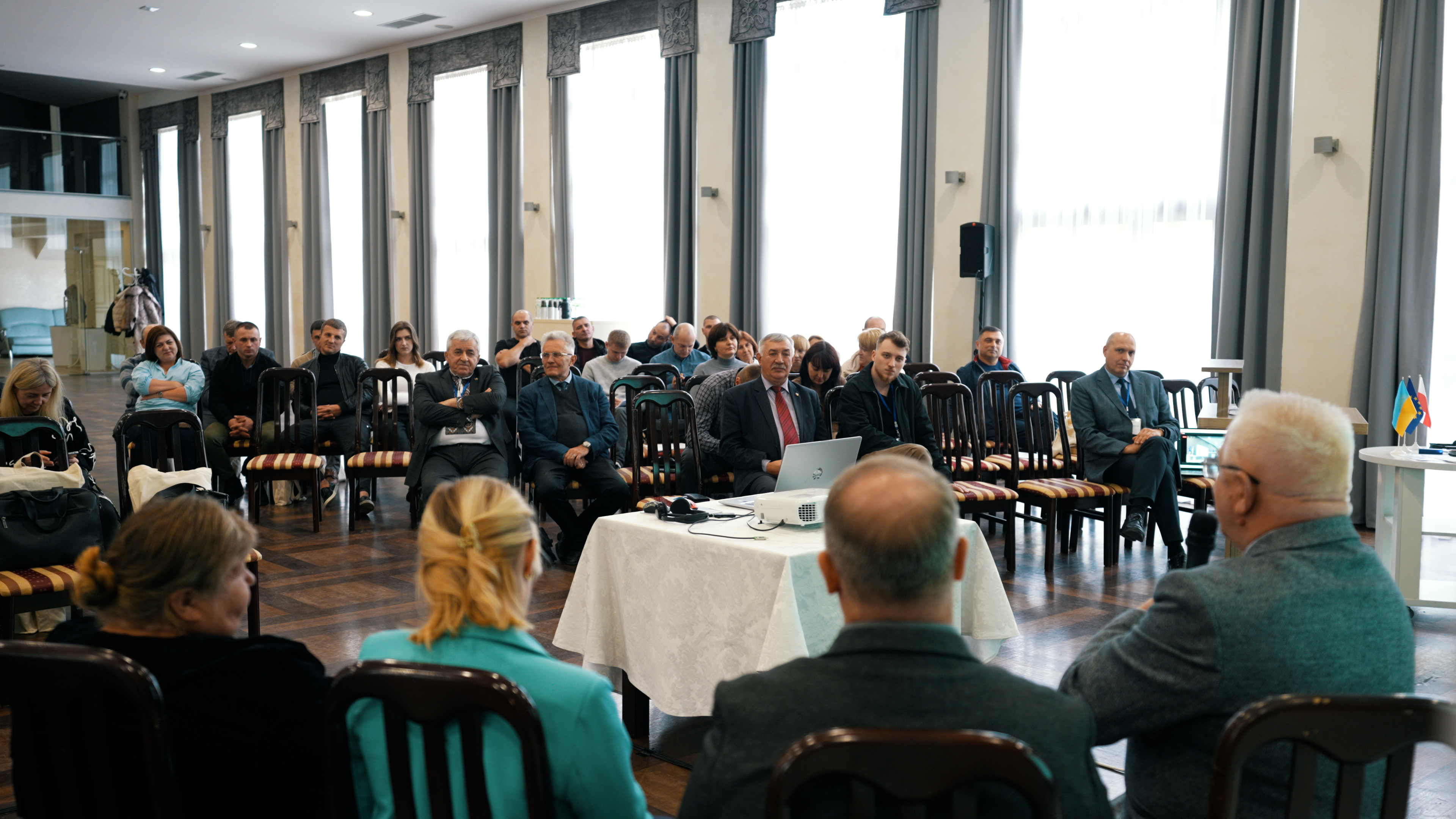
On October 17, the 2-day international conference “Applied application of methods of influencing the population of borscht in order to restore biodiversity in the cross-border territories of Ukraine and Poland” continued its work, taking place within of the project “Protection of biodiversity of the cross-border territories of Ukraine and Poland from invasive populations of borscht (Heracleum)” within the framework of the Interreg NEXT Poland – Ukraine 2021-2027 program, which is co-financed by the European Union.
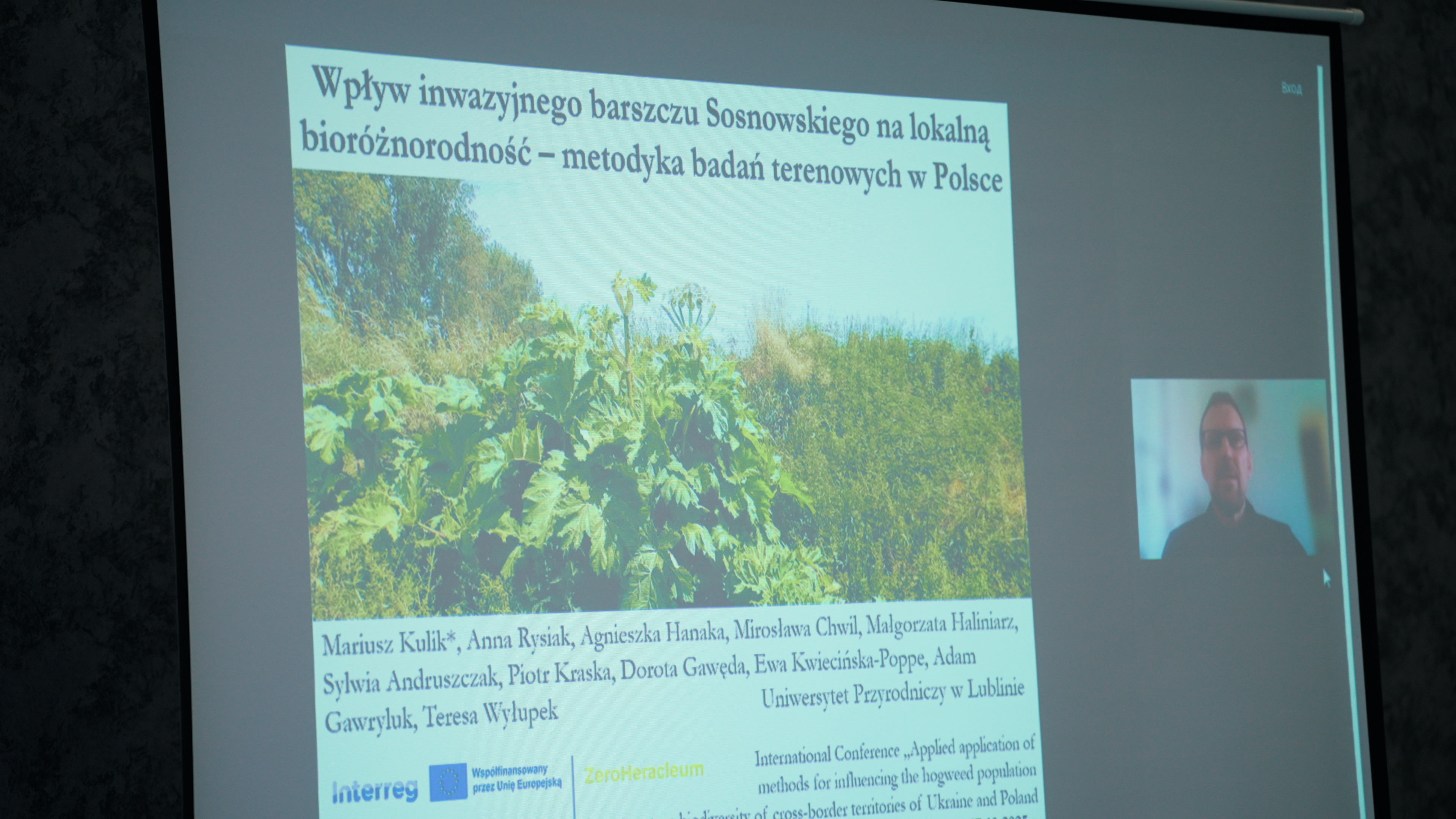
The 2nd module of the conference was devoted to the review of selective methods of influence on the borscht population. Marie Curie-Skłodowska University scientists Anna Rysiak and Sylvia Sova presented laboratory developments of science-based methods of influencing the Sosnovsky borscht population on the basis of genetic and biochemical research.
Hanna Korpita, Candidate of Agricultural Sciences, Associate Professor of the Department of Genetics, Breeding and Plant Protection of the Lviv National University of Veterinary Medicine and Biotechnology named after S. Z. Gzhitskyi spoke about chemical, agrotechnical and biological means of controlling the spread of the borscht population. Active discussion of the method of remote surveying, the result of which will be the formation of online maps of the distribution of Sosnowski’s borage on the territory of Ukraine and Poland, which will be used to monitor the population of borage throughout the entire period of the project, took place at the first discussion panel. The second discussion panel concerned the issues of the importance of cooperation between authorities, science and the public to achieve the desired result of cleaning the border territories of Ukraine and Poland from this invasive species. Special emphasis was placed on educational work among the population of territorial communities, the implementation of preventive measures among pupils and students in educational institutions, a wide information campaign in the mass media and social networks.
Reference: Project “Protection biodiversity of cross-border territories of Ukraine and Poland from invasive populations of borscht (Heracleum)” is implemented in nine territorial communities of Ukraine:where the borschivna population is most common in mountain riverbeds. In Poland, these are the following settlements: Tyszówce, Belżec, Yarchiv, Krynytsia, Lyubicha-Koroliwska, Laściw, Rakhanie, Susiec, Tarnawatka, Telyatyn, Tomaszów-Lubelski, Uhuwek, Dovgobychów, Horodlo, Hrubesiv, Mirce, Trzeszchany, Uhanie, Verbkovice, Zamostia, Labunia, Mjonchyn, Koskuvolya, Lublin, Fayslavice, Ustriki-Dolny, Bircha, Bukovsko, Pentnytsia, and Rutky. [https://pl-ua.eu/ua/projekty-i-historie/zeroheracleum/…(https://pl-ua.eu/ua/projekty-i-historie/zeroheracleum/…