
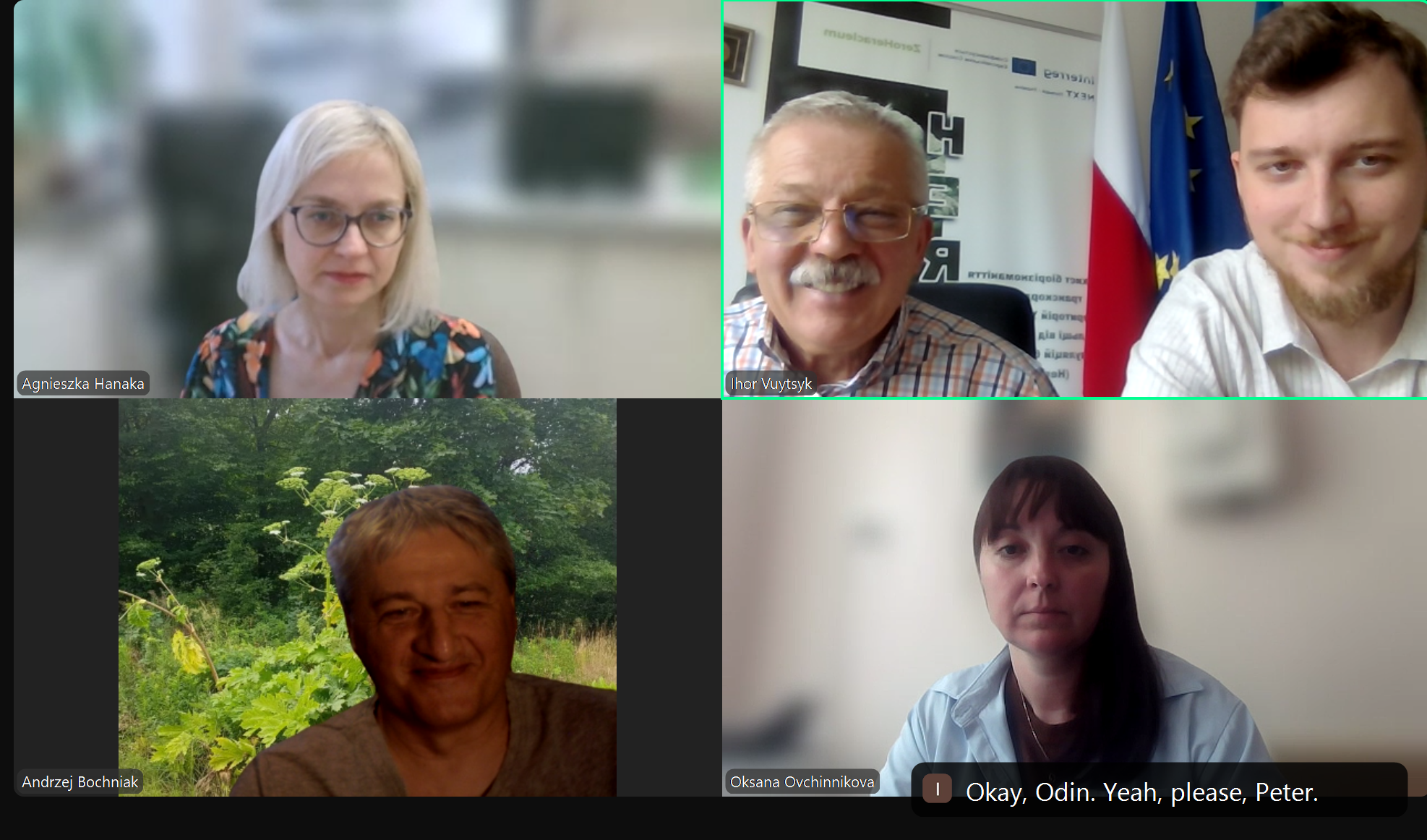
On 27 August, the partners of the project ‘Protecting the biodiversity of cross-border areas in Ukraine and Poland from invasive populations of hogweed (Heracleum)’ (PLUA.01.03-IP.01-0008/23), funded by the European Union under the Interreg NEXT Poland–Ukraine Programme 2021–2027, held another online working meeting.
The meeting focused primarily on the current implementation of project activities, the conduct of planned research, the use of funds, the preparation of reports, and the coordination of further actions between Ukrainian and Polish partners.
Separately, the partners discussed the dispatch to the Polish partners of samples of Sosnowski’s hogweed selected by researchers at the S.Z. Gżycki Lviv National University of Veterinary Medicine and Biotechnology. During the meeting, organisational matters relating to the receipt of these samples and the subsequent conduct of scientific research were also clarified.
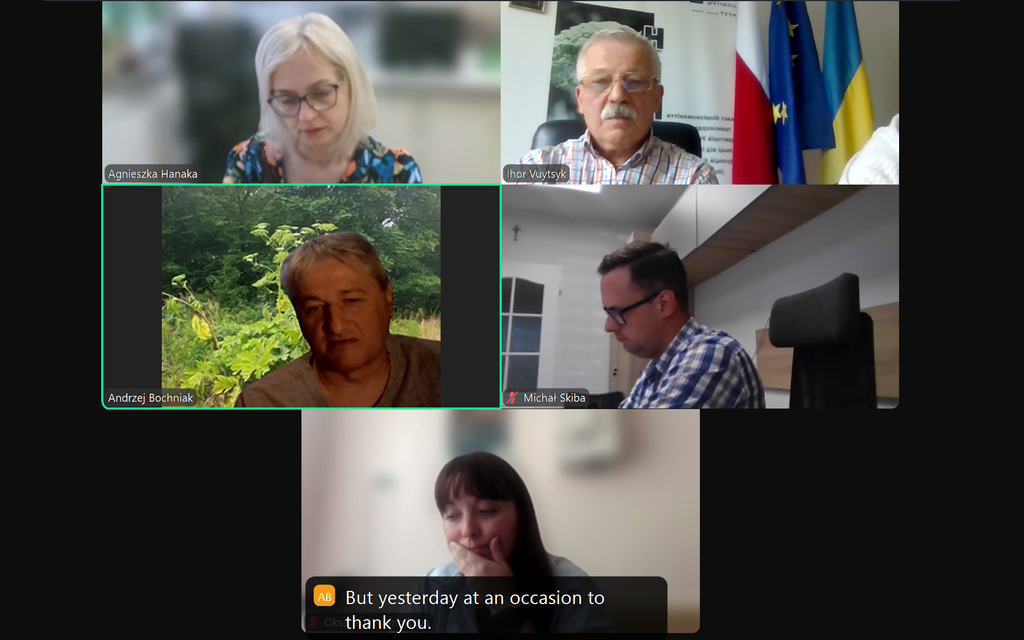
The meeting participants provided an update on the status of procurement and the use of funds. The partners reported on the implementation of planned procurements and the transition to the preparation of the relevant reports. During the discussion, all partners emphasised the need not to delay the preparation of reporting documents until all activities had been completed, but to draw up the documents as and when the work was actually carried out and the expenditure incurred. This will ensure that reports are produced on time and that the project implementation timetable is adhered to.
An important part of the meeting was the discussion of information and awareness-raising materials. The Polish partners presented four educational videos, produced as part of the project, for joint viewing and approval. The videos are aimed at both adults and children and focus on the dangers posed by the invasive hogweed to human and animal health, methods of protection and control, how to identify the plant and how to report new sites of its spread via the mobile app developed as part of the project.
The lead partner approved the videos presented, offering only minor comments. Once these have been incorporated, the videos are planned to be distributed via YouTube, the project’s website and the partners’ social media channels, as well as used during educational events in educational institutions.
Separately, Ihor Vuytsyk, head of the Lviv Agrarian Chamber, highlighted the potential for using a microwave method to eradicate hogweed. This method is not covered by the current project and is not included in its planned activities; however, it could be implemented in parallel as part of other programmes. Its potential application could enhance the project’s results and contribute to the further development of effective methods for controlling invasive hogweed populations.
The partners agreed to continue discussions on this issue and to exchange all information currently available regarding the technology, its potential application and the prospects for securing additional funding.
The partners confirmed their readiness to coordinate their joint work, carry out planned tasks in a timely manner and ensure proper cooperation to achieve the project’s objectives of protecting the biodiversity of the cross-border territories of Ukraine and Poland from the spread of hogweed.
For reference:
The project ‘Protecting the biodiversity of cross-border territories in Ukraine and Poland from invasive populations of hogweed (Heracleum)’ is being implemented under the Interreg NEXT ‘Poland–Ukraine 2021–2027’ Programme. The project is being implemented by the Lviv Agrarian Chamber in partnership with the S. Z. Gżycki, the Maria Curie-Skłodowska University, the University of Life Sciences in Lublin and the Lublin Chamber of Agriculture.
Source: Lviv Agrarian Chamber
Find out more about the 𝙕𝙚𝙧𝙤𝙃𝙚𝙧𝙖𝙘𝙡𝙚𝙪𝙢 project
Interreg NEXT Poland – Ukraine
#EU#funds#InterregNEXT#Interreg#CBC#Programme#PL_UA#ZeroHeracleum
The content of this publication is the sole responsibility of the authors and can in no way be taken to reflect the views of the European Union. Show less