
In June this year, the Lviv Agricultural Chamber, as part of the United Nations World Food Programme’s (WFP) Institutional Feeding Programme, once again delivered food supplies to 122 institutions in the Lviv and Ternopil regions, which are home to 15,000 people in need, including over 4,800 internally displaced persons. This amounts to almost 90 tonnes of food.
The aid was received by social service providers, hospitals, charitable organisations, educational institutions, shelters and others. A notable feature this month was that, thanks to the Programme, the range of items in the food basket increased by a third: in addition to premium-grade wheat flour, pasta, oat flakes and fortified sunflower oil, sugar, buckwheat and peas were added, at a rate of 5.92 kg per person.
It should be noted that all Ukrainian-produced food products are of exceptionally high quality, as they meet the requirements of the international standard ISO 22000:2018 ‘Food Safety Management Systems’, as confirmed by the manufacturer’s quality and compliance certificates.
From 17 to 21 June, representatives of the Lviv Agrarian Chamber paid a monitoring visit to institutions participating in the Institutional Catering Programme, located in the Morshyn, Stryi, Peremyshliany, Zolochiv, Zabolotsiv and Novoyarichiv communities.

Representatives of the Lviv Agrarian Chamber visited the Zolochiv Central District Hospital, the Zolochiv City Council Social Services Centre of Zolochiv District, Lviv Region, the Novoyarichiv District Hospital, the Zabolotsiv Village Council Social Services Centre, and the charitable organisation ‘International Charity Service “Emmanuel-IMOSE-Heart of the Son” Charitable Foundation’.
During the visit, the Chairman of the Lviv Agrarian Chamber, Ihor Vuytsyk, and monitoring officer Davyd Kravchenko familiarised themselves with the food storage conditions, inspected the kitchens where meals are prepared, spoke with people who eat directly at these facilities, and received feedback on the Institutional Catering Programme and the quality of the food.
In particular, during a visit to the "Centre for the Provision of Social Services of the Zolochiv City Council, Zolochiv District, Lviv Region", the monitoring group met with residents of the shelter during their lunch break and spoke with internally displaced persons: Ms Rima and Ms Galina from Lysychansk, and Ms Svitlana from Lyman. They spoke with great gratitude about their impressions of how the international community is looking after them through the UN World Food Programme’s Institutional Food Programme.
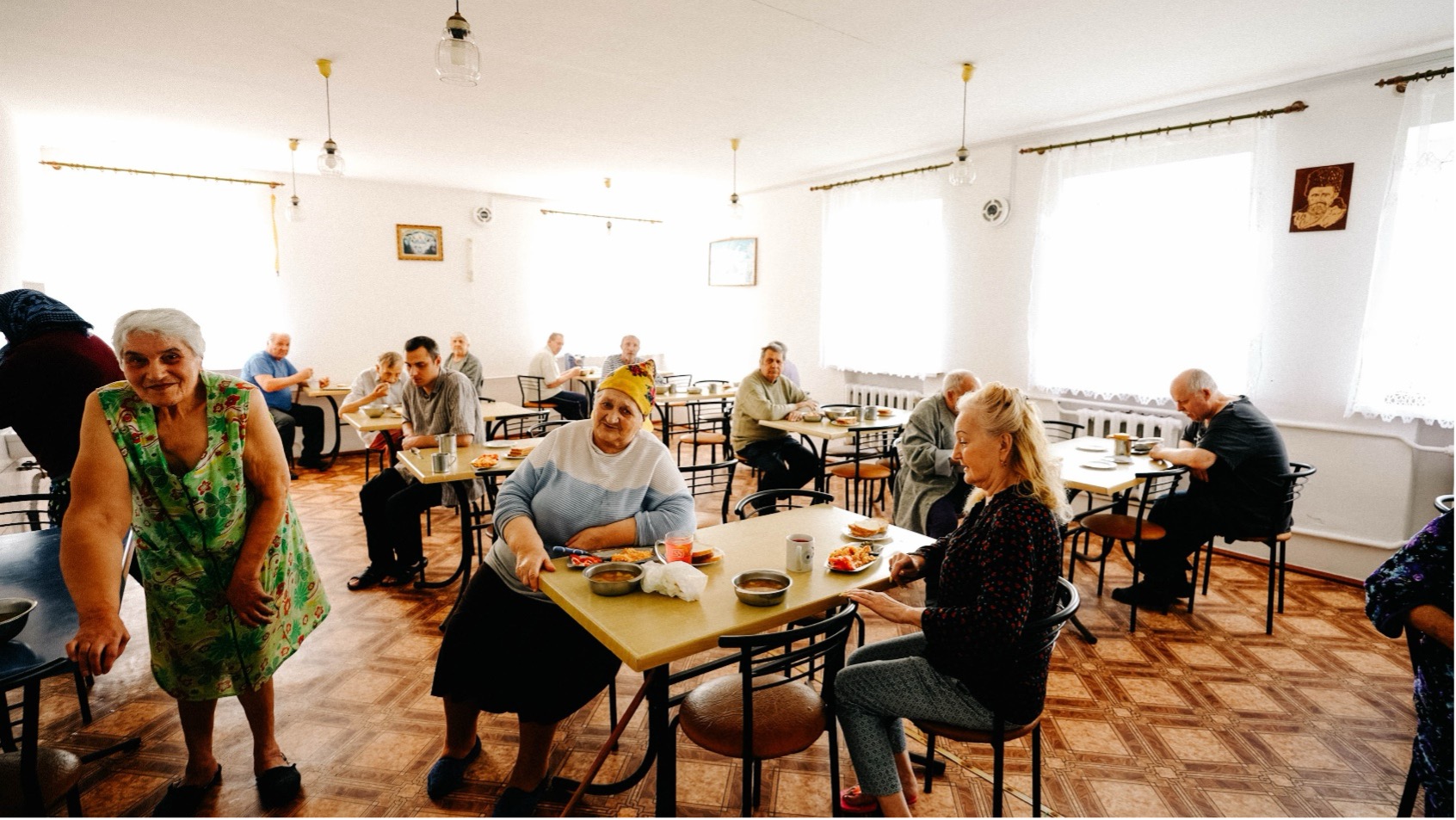
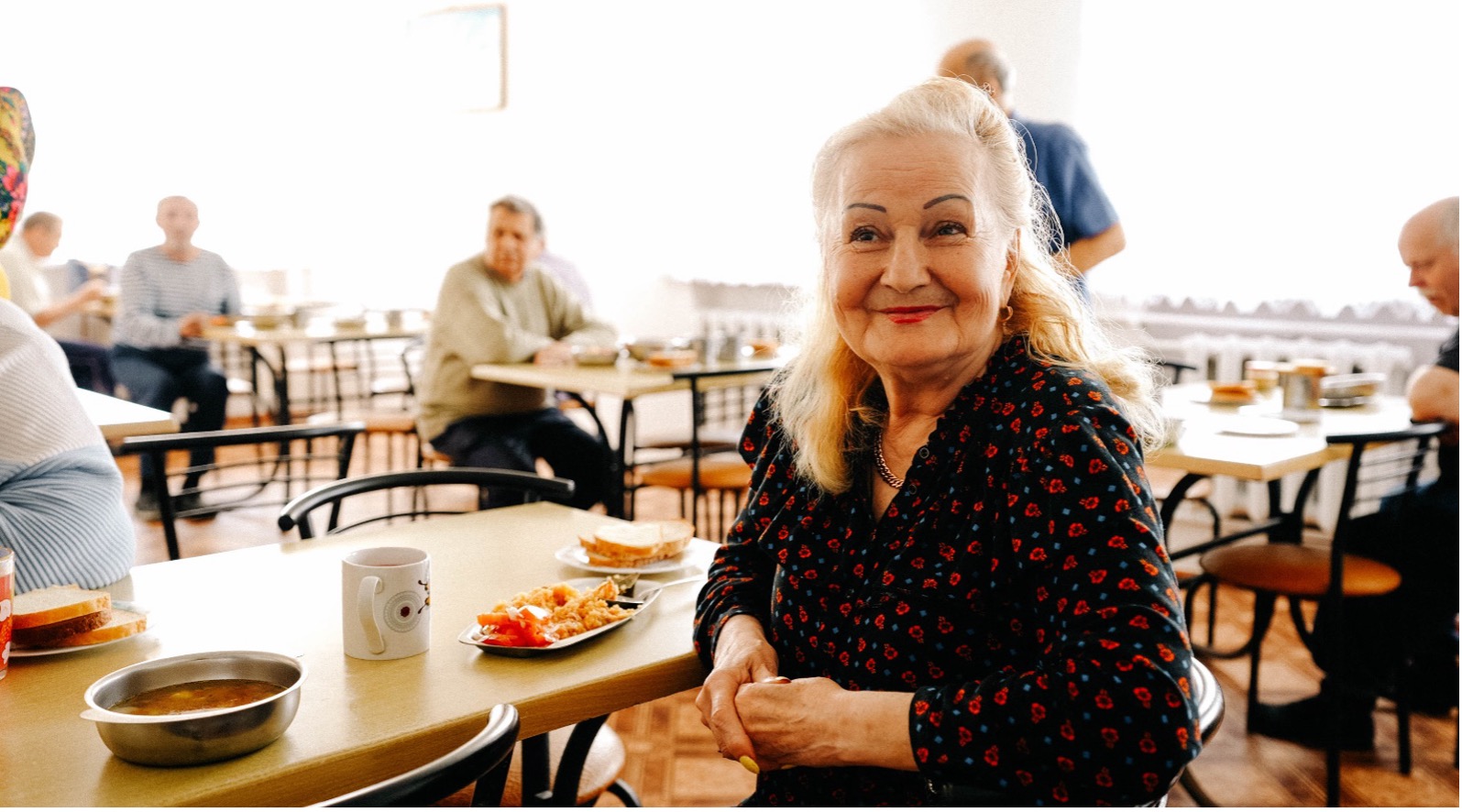
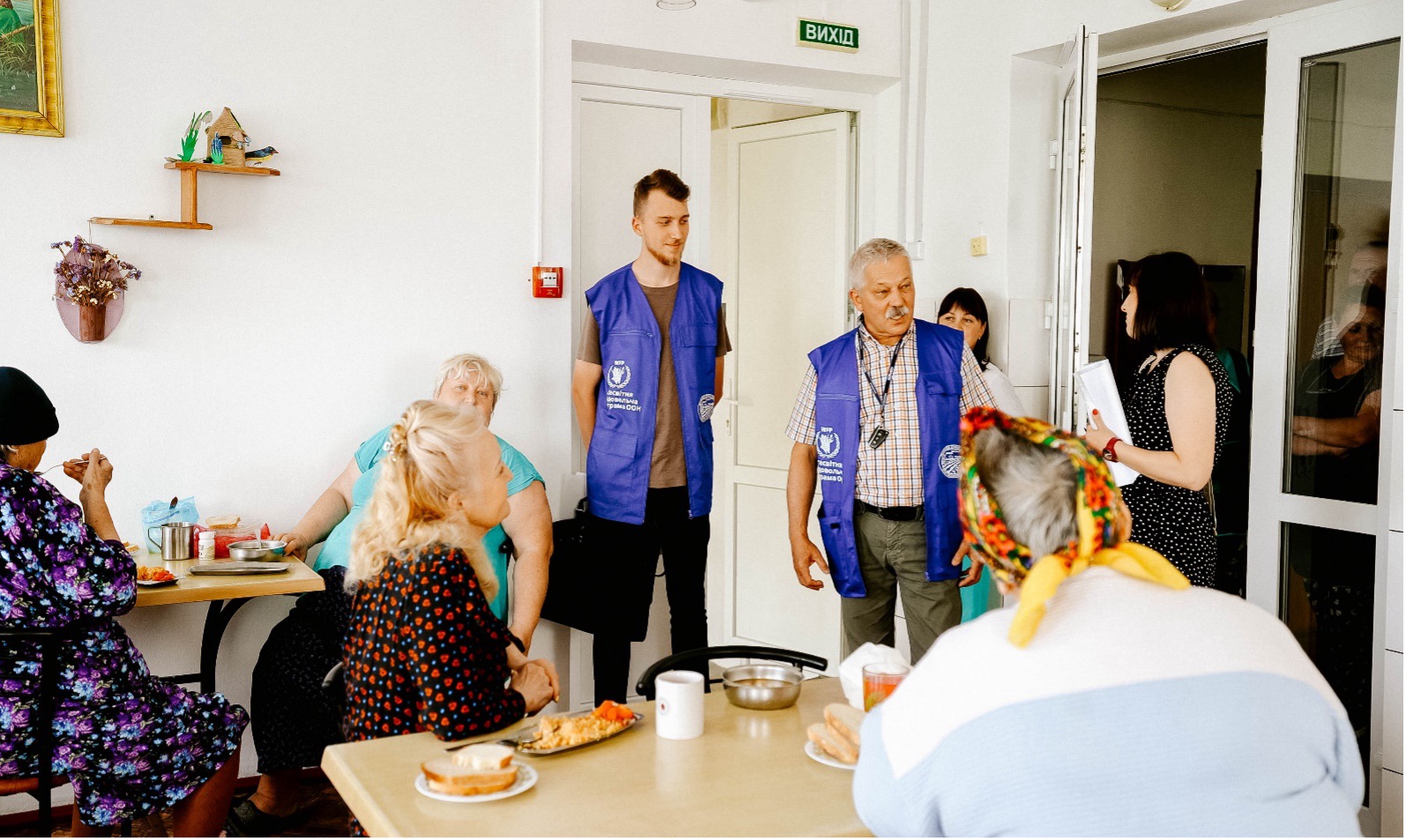
It should be noted that the vast majority of institutions visited by the monitoring group adhere to the recommendations and requirements regarding the storage conditions of the products provided, as well as the conditions for their accounting and use. When speaking with the heads of the institutions, representatives of the monitoring group drew attention to the fact that storage areas must have a proper waterproofing system and be equipped with adequate lighting, a thermometer and a hygrometer for constant monitoring of temperature and humidity. Foodstuffs must be stored on clean shelves, pallets or in clean cupboards, in packaging or food containers, and must not be exposed to direct sunlight; the premises must be kept clean and free of foreign odours to prevent the appearance of rodents or other pests. A first-aid kit, a working fire extinguisher and a fire safety kit must all be present. Compliance with these requirements is a prerequisite for establishments to participate in the institutional catering programme.
In the near future, the Lviv Agrarian Chamber plans to visit a number of institutions in the Drohobych and Sambir districts.
Source: Lviv Agrarian Chamber